Trial for Lavrov and Putin: all about the tribunal for Russia that received Europe's blessing
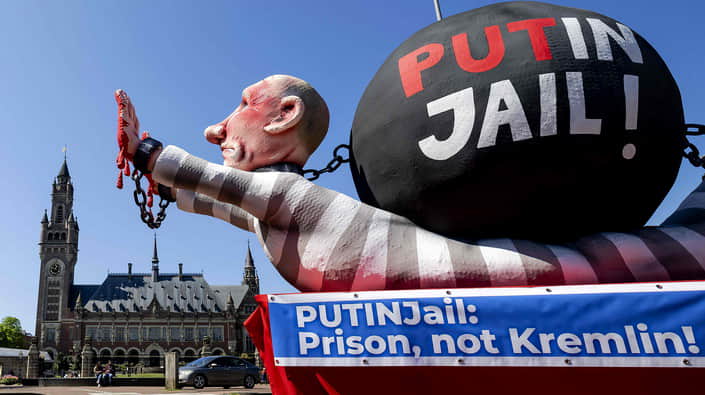
On 9 May 2025, the day when Moscow holds its military parade marking the 80th anniversary of the Soviet Victory Day, foreign ministers and top diplomats from EU countries and other Western states arrived in the Ukrainian city of Lviv. They gathered to announce the creation of a mechanism that will turn Russia’s leadership into legally confirmed war criminals.
A tribunal will be established to prosecute politicians for aggression against another country for the first time since the 1940s.
In essence, this is a repeat of the Nuremberg Tribunal against the Nazis.
The tribunal for Russia’s top officials will be located in The Hague.
The key difference from Nuremberg is that the trial of the Nazis was only initiated after the war had ended. In contrast, the agreement on the tribunal for the Russian elite has already been reached, and it may even begin its work without waiting for a ceasefire. This means that the new tribunal won’t have control over the territories occupied by the aggressor country as the Allies had in the case of post-1945 Germany.
Therefore, the countries participating in the future tribunal have agreed that trials against Russia’s top officials can be held in absentia. Verdicts are likely to be issued. Punishments may include imprisonment, including life sentences, and confiscation of property.
Charges may also be brought against Putin and Lavrov, but verdicts in their cases will likely be delayed until their terms in office end. This compromise was reached with the involvement of the United States. Charges may also be filed against the leaders of Belarus and North Korea for aiding Putin in committing aggression.
When will the tribunal start working?
"We are creating this tribunal because impunity for committed crimes is unacceptable. Leaders who decided to send soldiers to Ukraine must also be held accountable. If there is no punishment, this will happen again", declared Kaja Kallas, the EU High Representative for Security Policy, in Lviv.
It was in the Lviv City Hall building that diplomats officially greenlit a new international court, which will investigate only one crime – the illegal Russian aggression against Ukraine.
European Pravda prepared this text based on conversations with diplomats representing Ukraine, institutions of the Council of Europe, the EU and one European country. The sources spoke on condition of anonymity because the information is not yet public, and some of it is sensitive for intergovernmental relations.
"We expect that the tribunal could start operating in 2026", said sources in Kyiv.
"The optimistic plan is for the first investigations to begin in 2026", one source admitted. It will take longer to reach verdicts.
The decision made in Lviv was only a political one. It was an important step in crossing the point of no return and protecting the initiative against pressure from the US. Lengthy legal processes lie ahead.
Next Wednesday 14 May, at the meeting of the Council of Europe's Committee of Ministers in Luxembourg, Ukraine will officially initiate the creation of the tribunal. This is a formality, as the document has already been agreed. A week or two after the Luxembourg meeting, the Council of Europe will formally approve it and sign a legally binding agreement with Ukraine. It will need to be ratified by the Ukrainian parliament.
Then comes the longest phase. Several dozen European (and some non-European) countries will sign an Enlarged Partial Agreement with the Council of Europe on their participation in the tribunal. Ukraine expects participation from 38 countries, although the number may turn out to be lower. Each of these countries will then need to ratify the agreement.
Only once a certain number of ratifications has been reached (the number is still to be agreed) will the tribunal be able to begin operating fully.
It will be a long process, but there is no doubt it will be completed. The political Rubicon was crossed on 9 May in Lviv.
Who will be in the "dock"?
International law recognises aggression as a crime, but it does not provide mechanisms to punish Russians for it. The special tribunal is intended to fill this gap.
This will be a unique precedent in the post-war world.
Over the past 80 years, the world has seen dozens, if not hundreds, of wars. However, since the Nuremberg and Tokyo tribunals, which prosecuted those responsible for World War II, the global community has never dared to punish politicians for aggression.
Aggression is considered an "elite" crime. In Nuremberg, 16 defendants were charged with aggression (four were acquitted on this count).
According to Kyiv, the list of defendants in The Hague will include up to 20 individuals.
Charges are to be brought against Russia’s top political leadership – Putin, heads of government, parliament, security agencies and the top command of the Russian army.
Ukraine will have the role of determining this list.
According to the statute, the tribunal will initiate investigations against a specific individual only upon the request of Ukraine’s Prosecutor General. Essentially, Ukraine delegates the prosecution of suspects to the tribunal through this procedure.
From that point, the role of the Ukrainian state ends, and the process becomes international. The tribunal’s prosecutor must conduct an investigation and decide whether there are grounds for indictment. The investigating judge of the tribunal must approve or reject an arrest warrant. Then the tribunal itself takes place, and a verdict is issued.
One of the key agreements is that the court can be held in absentia – in other words, without the defendant present. Without this, the tribunal would not be effective. The Nuremberg trials also allowed prosecutions in absentia, and, to take one example, Martin Bormann was convicted this way.
Special procedure for Putin
There is no doubt that Putin bears the primary responsibility for the aggression. However, a significant number of countries involved in creating the tribunal argued that a head of state has immunity from criminal prosecution.
For Ukraine, however, it was crucial that the special tribunal could not ignore Putin’s role. Ukrainian society would not have accepted that.
Negotiations on this issue began in 2022, and it's only in 2025 that proponents of absolute immunity have finally given way.
The tribunal's statute will not include the term "personal immunities." Instead, it contains the wording "functional immunities do not apply". This means that officials involved in planning and facilitating the aggression cannot claim they were merely performing their official duties.
There are also no restrictions on investigating crimes, including those committed by Putin. However, there is a clause stating that judicial proceedings are to be suspended for a "Sitting Head of State, Head of Government and Minister of Foreign Affairs".
This is how it will work in practice:
The prosecutor of the special tribunal will undoubtedly open criminal proceedings against Vladimir Putin, Sergey Lavrov and likely also Prime Minister Mikhail Mishustin. If the evidence of their involvement in the aggression is sufficient, The Hague will officially declare them accused.
"In other words", explained a government source involved in the tribunal negotiations, "the prosecutor will carry out the investigation, draw up an indictment, present it publicly and submit it publicly to the permanent Pre-trial Judge for further proceedings. At this point, the process is paused for as long as the individual remains in office as president, prime minister or foreign minister. As soon as the accused leaves office, the process resumes automatically."
Kyiv places particular emphasis on the indictment being public.
It is also known that Ukraine will not limit itself to the Russian leadership.
Among the accused will definitely be the self-proclaimed president of Belarus, Lukashenko. Belarus has provided its territory, infrastructure and military bases for the Russian aggression. Lukashenko personally authorised this and supported the aggression.
Kyiv also intends to prove the guilt of North Korean leader Kim Jong Un, although this is more complicated.
Arms, shells and missile supplies from North Korea are extremely important for Russia’s combat capabilities. But this does not fall under the legal definition of the crime of aggression. The basis for charges against Kim Jong Un stems from the participation of North Korean military personnel in the war against Ukraine. However, North Korean units have not engaged in combat on Ukrainian territory, only in Russia’s Kursk region. Ukrainian lawyers plan to prove that this also constitutes part of the aggression against Ukraine, although this is a less clear-cut task.
The situation with Iran is even more difficult.
Members of Iran’s Islamic Revolutionary Guard Corps (IRGC) took part in the aggression in 2022, personally coordinating and launching drone attacks on Ukraine until the Russians learned to do it themselves. But the tribunal is meant to prosecute state leaders, not ordinary commanders. Currently, there is no solid evidence base against specific Iranian leaders.
Punishment for the guilty
At Nuremberg, 12 out of 24 defendants were sentenced to death.
In The Hague, there will be no death penalty. The maximum sentence will be life imprisonment. Also possible are limited prison terms of up to 30 years. In addition, the court may impose fines and order the confiscation of personal assets.
How might this work in practice?
In theory, the states participating in the tribunal will sign agreements committing to hand over the accused to the court if they are found on their territory. There will also be an agreement with Europol.
However, everyone understands that Russian leaders will avoid traveling to countries where they face arrest.
Therefore, the primary consequence will be symbolic – the verdict itself, meaning the transformation of Russian leaders into internationally recognised criminals.
The ruling may also include asset confiscation, although it is clear that most of the Russian leadership’s assets are located within Russia. Confiscating the property of Naryshkin or Putin would only be possible in the fantastical scenario in which a future Russia – or another state on its territory – signs a cooperation agreement with the tribunal.
At Nuremberg, three Nazi defendants were acquitted. The Hague tribunal does not rule out the acquittal of some suspects either.
An independent defence unit will be created within the tribunal’s secretariat to handle trials in absentia. If in the future, after sentencing, a person is apprehended, the trial will be held again to give the accused another chance to defend themselves.
Ukraine’s negotiating team had proposed including in the tribunal’s statute that the aggression began in 2014, but this proposal did not gain support.
However, a compromise favourable to Ukraine was found: the tribunal will have the authority to determine the timeframe on its own. This means Ukraine can initiate proceedings against generals responsible for the occupation of Crimea and Donbas, or against Vladislav Surkov, one of the architects of the war against Ukraine in 2014, when he was an aide to the Russian president.
The ambiguous role of the United States
The list of participants in the future tribunal has not yet been officially determined.
Initially, around 40 states were involved in the negotiations for its creation. Among them were all G7 members and every EU country except Hungary. All participants belong to the "collective West", and this was one of the main reasons for scepticism – that it would be a "West against the rest" court.
There had been hopes that at the final stage, the US would convince some countries of the Global South to join the special tribunal. But the opposite happened. In March 2025, the United States decided to stop participating in the Сore Group working on creating the tribunal.
However, multiple sources say that the US withdrawal was not destructive. They simply stopped attending meetings, without opposing the tribunal’s creation by others. Moreover, according to European Pravda’s sources, it was precisely the constructive role of the US in early 2025 that allowed a compromise to be reached on how to investigate the crimes of the "troika" of Putin, Lavrov and Mishustin. Under President Biden, there had previously been no progress on this matter.
Germany, France and the UK have also stalled the process during the three years of negotiations. G7 countries have worried that prosecuting Putin might provoke the rest of the world to unite against the West and potentially establish their own tribunal to prosecute, for example, the former US leadership for the invasion of Iraq. In the end, however, those who supported Ukraine managed to convince the others.
And here the US, by deciding to distance itself from the tribunal, once again played a positive role, even if inadvertently. For the remaining participants, it became clear that action had to be taken now or never, before a potential US transition from passive disengagement to active opposition.
Still, within the EU, there is hope that the US may reconsider. "I believe the US will return", said Kaja Kallas in Lviv. In any case, the point of no return in the creation of the tribunal for Russian aggression has already been passed.
Sergiy Sydorenko,
Editor, European Pravda,
From Lviv