Moldovan MP: We have a plan to reintegrate Transnistria, іt will be done very quickly
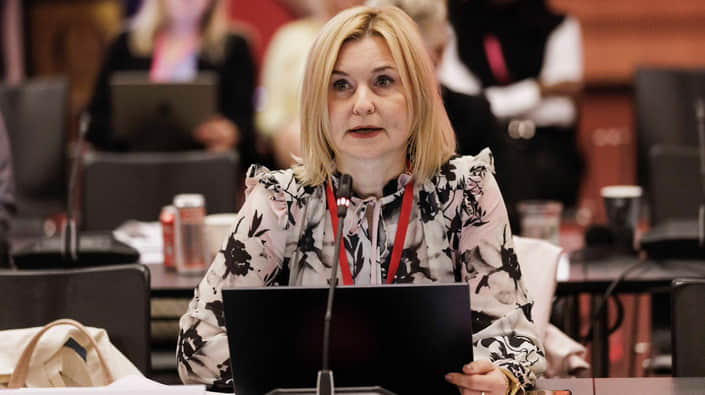
Ina Coșeru is a Moldovan MP from the ruling Party of Action and Solidarity (PAS). She chairs Moldova’s Parliamentary Committee on Foreign Affairs and European Integration. Her position is closely linked to Moldova's path towards EU membership, since it falls to Parliament to do a significant part of the work associated with the accession process.
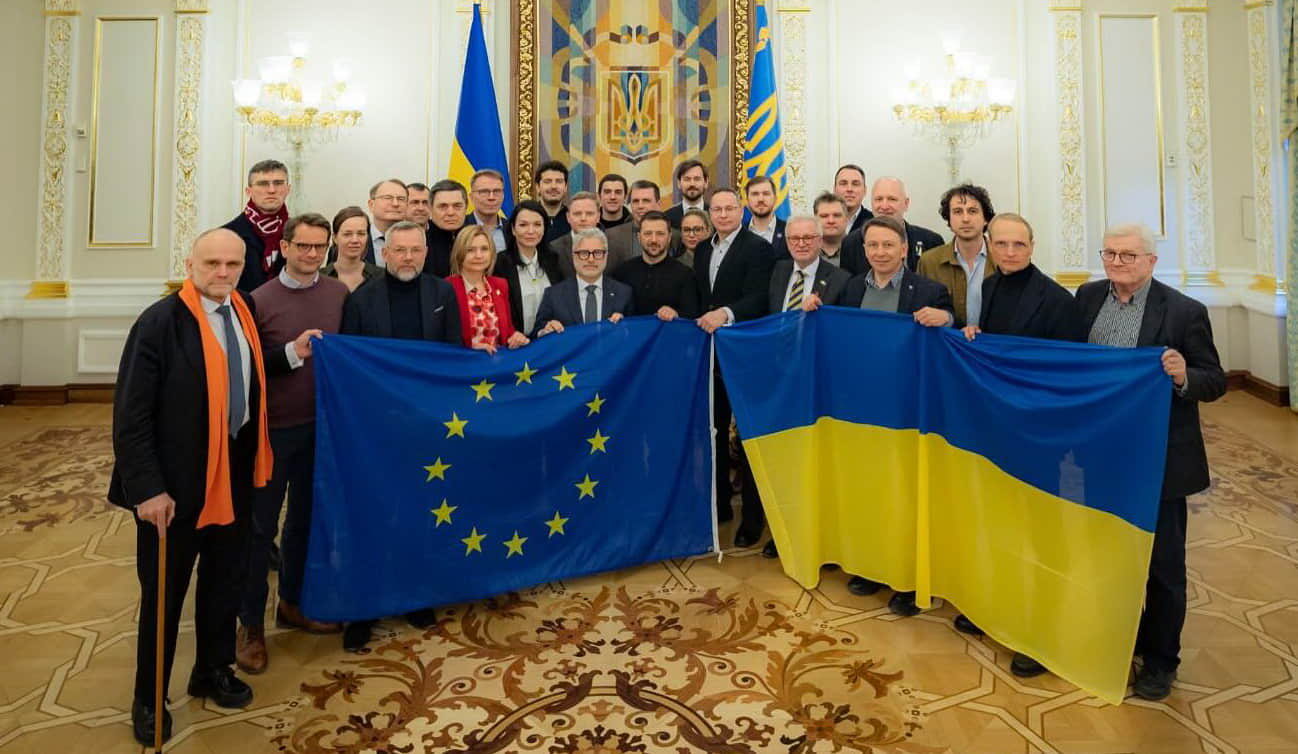
Coșeru was in Kyiv this week as a delegate of United for Ukraine, which brings together Western politicians supporting Ukraine during Russia’s armed aggression.
Coșeru is currently in a unique situation. She holds a high-level position in the current Parliament, but she won’t be standing in the upcoming elections on 28 September. That means she is less constrained by political considerations. At the same time, the MP emphasises that she is still very much part of the ruling party’s team and explains how crucial it is for both Moldova and Ukraine that PAS wins the next elections.
In this conversation with European Pravda, Coșeru acknowledges that the idea of decoupling Moldova and Ukraine in their EU negotiations has been rejected. That won’t happen before the elections, although Chișinau was working on it some time ago. She also recognised that the government is preparing for the reintegration of Transnistria.
But the government's main public task now is to convince people that Moldova will be able to comply with all European legislation and be legally ready to join the EU by 2028. This last point is the core of PAS's election campaign.
Our conversation with Coșeru covered all of these topics. We present it here in a condensed form, in direct first-person language rather than a question-and-answer format, with quotes grouped by topic.
Moldova has set itself the goal of being ready to join the EU by 2028
This is a realistic deadline. It comes from the messages we receive from the Europeans, who tell us that it is possible provided there is a pro-European majority in the Parliament of Moldova. If there is no pro-European majority, of course, the deadline will be pushed back. Without a majority, it will not be possible to quickly pass the necessary European legislation.
That is why the parliamentary elections on 28 September are the most important milestone we need to pass. We must explain to the electorate not only the risks, but also the opportunities for Moldova’s future.
The government’s action plan confirms that 2028 is a realistic deadline.
It’s achievable if we take into account the financial and technical support we receive from our European partners. We know it will require tremendous effort. We need to harmonise our legislation with 27,000 EU directives. That’s around 10,000 per year – several directives per day. It is very challenging. We realise that the amount of work is overwhelming. But our European partners are confident that we can do this by 2028.
We also realise that everything starts with strengthening democratic institutions. The Europeans emphasise this constantly: negotiations begin with the Fundamentals cluster, and the Fundamentals cluster is the last to be closed.
They need to be sure that Moldova and Ukraine are prepared to comply with EU rules, with strong democratic institutions in place. Otherwise, accession is not feasible.
Synchronisation with Ukraine
Moldova and Ukraine have been journeying towards EU accession together since 2022. We received candidate status together and opened negotiations together. It’s very important that we start negotiations on the first cluster, Fundamentals, together with Ukraine as well. This is the shared vision of the government and the Parliament – I mean the pro-European majority in Parliament.
It is unfortunate that one EU country [Hungary] is currently blocking the opening of the clusters.
In the run-up to the parliamentary elections in Moldova, there have been discussions about opening the negotiations earlier for Moldova than for Ukraine, to send out a positive signal to the pro-European electorate that negotiations are truly moving forward and show that 2028 is still our goal.
But now, with only a month to go until election day – 28 September – and campaigning already underway, I don’t think it will be possible to open negotiations on the first cluster before the elections. To open a cluster, the EU has to convene an Intergovernmental Conference – and that won’t be organised within a month. For the Europeans, it is a process: they need to agree on the date and the venue. No decision has been made in this regard, and I am sure it will not happen before the elections.
So we’ll remain synchronised with Ukraine.
According to the European Commission’s reports, both Moldova and Ukraine are ready to open negotiations. This is stated very clearly. So we should continue together and open negotiations on the first cluster (and others, if the Europeans agree) simultaneously.
After this first step, everything will proceed on a merit-based approach, meaning the speed will depend on the results we deliver. If either Ukraine or Moldova delivers faster, then chapters will be closed and new clusters opened separately. But for opening the first cluster, we will maintain the same format we have had since 2022.
Let’s not forget that candidate status for Ukraine and Moldova in 2022 was made possible by the courage of Ukrainians on the front line. The process was only accelerated because Ukraine was brutally attacked in a full-scale war by the Russian Federation. Ukrainians are paying the highest price – with their lives – to protect democracy in the European Union. This is another reason why we should remain together until we open the first cluster.
The key challenges Moldova anticipates in negotiating the Fundamentals cluster
Combating corruption is, of course, one of the key challenges in Moldova, as it is in Ukraine.
We have some very high-profile cases against Moldovan oligarchs who have left the country but still have influence in the Republic of Moldova.
One of these oligarchs, Ilan Șor, leads a criminal group attached to the Kremlin. At last year's elections, we saw unprecedented interference by this group. They transferred a lot of money to the Republic of Moldova illegally, aiming to take control of the political situation in Moldova and bring it back under the influence of the Russian Federation.
Here we need to deliver. And it’s the judiciary that needs to deliver on this.
Judicial reform began in 2021, when we passed the first laws reforming this sector. Since then, we have been pre-vetting the Superior Council of Magistracy (SCM) and the Superior Council of Prosecutors (SCP). It hasn’t been easy; the system fought against us. Many of the judges and prosecutors are connected to criminal groups. Some judges and prosecutors did not pass the pre-vetting process.
Now we are seeing that some judges and prosecutors don't want to go through the second stage – vetting – either. They just leave their positions, because they realise that they won’t be able to prove the origins of their money, their houses, cars and other assets.
We understand that this is not going to happen overnight. It will take time before the whole system is cleared out.
Vlad Plahotniuc and other high-profile cases
Vladimir Plahotniuc, the oligarch who controlled the Republic of Moldova between 2016 and 2019, was recently arrested in Greece and is now due to be extradited to Moldova. This will be a real test for the judiciary given all the direct ties between Plahotniuc and Moldovan judges in the past.
We'll see whether our justice system will be able to handle this case.
This isn’t the only test case. We also have other cases that were started after the 2009 revolution. All of them need to be completed.
Another example linked to elections is a bribery scheme coordinated from Moscow by Ilan Șor.
It comprises a lot of petty corruption cases against people connected to Șor who were distributing money among the electorate to buy their votes. There are a number of cases that have not been completed because the judges or prosecutors dealing with them have not gone through the vetting procedure (and they are not sure whether they will manage to pass), and they just keep those cases frozen.
We also have the case of Marina Tauber, a Member of Parliament who is connected to Ilan Șor’s criminal group.
This is a very revealing case, because the judge hearing her case has ruled that the judgment will be pronounced on 30 September, i.e. two days after the elections. We all know it is not a coincidence that the date has been set after the elections and not before.
We need to see how the elections go and whether pro-European forces can stay in government.
This shows how high expectations are and how crucial these elections will be.
How the EU will assess progress in the Fundamentals
In terms of democratic institutions, to "tick the boxes" for the EU, we need to assure our European partners that there are independent media outlets in Moldova and they convey information in the languages that people speak.
And of course, in terms of reforming the justice system or combating corruption, we need to prove that justice is served. People who were part of past schemes must be held accountable for what they have done. For instance, Brussels is waiting for the open cases connected to Ilan Șor’s scheme to be completed.
These judicial cases will also be connected to Brussels' expectations that the reformed justice system will protect elections to ensure less interference by the Russian Federation in future elections.
Right now, Russia interferes in every election. In 2023, the Kremlin carried out a kind of "small case study" in which they tried all their dirty tricks to buy the electorate of one region of Moldova – Gagauzia. People received a lot of money, and in the end they voted for Evghenia Guțul – a person nobody knew. Then, based on that example, they tried to rig the national elections in 2024.
We have no idealistic expectations that we can fully stop Russian propaganda. There are not many solutions yet for protecting "digital borders", either in Moldova or anywhere in Europe. But criminal groups that buy votes must be prosecuted.
Of course, corruption is not only present in elections.
It exists in many spheres – in customs, for example – and we need to address these cases as well. Petty corruption is also present, and we need to combat it.
But if our reformed justice system proves that it can resist pressure and deliver justice in major cases of high-level political corruption, then we will be able to address more low-level corruption and fight against that too.
We already have one person who was convicted – Evghenia Guțul, the "elected" head of Gagauzia [who was sentenced to seven years in prison for using undeclared Russian funds while working for Șor’s party – EP].
The Guțul case showed how strong the resistance to justice can be. The judges dealing with her case were frightened and intimidated in many ways. They and their relatives got phone calls with death threats, they were sent pictures of people who’d been beheaded, and so on.
Given that, we need to be very sure that judges and prosecutors will resist that sort of pressure in future cases. For that, we need to have highly qualified, well-paid professional people of integrity who will pass the vetting procedure and who want to bring a new quality to the justice system.
And no less importantly, they need to be independent from state structures – not connected to any politicians. They must be able to make decisions independently, and that includes being independent of the current pro-European majority.
The Transnistrian problem
Transnistria is a very difficult issue for Moldova.
We can see light at the end of the tunnel. Things are changing, and the key change is that Russia doesn’t supply them with gas through Ukraine anymore.
Why do I put so much stress on energy? Because the Transnistrian budget, which enabled it to exist, was formed from several main sources, and the key source was electricity generated from "free" Russian gas, which Transnistria used to sell to Moldova.
Now they can’t sell it, and they no longer have the money to survive.
We still have some energy dependency on Transnistria because the electricity we buy on the European market technically goes through the Transnistrian grid – that is how the grid was built in Soviet times – and they can switch off electricity for us. But we are building the Vulcănești-Chişinău interconnector to get rid of this dependency, and the first interconnector will be completed this year.
For Transnistria, there is no way forward without us.
This is why there is a plan for how to integrate them, how to start paying [public sector] salaries, and they know about this plan. It is a governmental proposal that we are currently discussing, and it’s called the "Re-integration Plan for the Transnistria Region".
We understand that re-integrating Transnistria into Moldova will be very costly, and we need to calculate these costs and figure out where we will get the money from.
But if everything goes well with the 28 September elections, the changes in the Transnistria region will be very quick.
The link between Transnistria and EU accession
How we apply European norms in the region is a matter of discussion and debate.
Sometimes people ask whether we need to reintegrate the Transnistria region before Moldova joins the EU.
For the moment, nobody is telling us that we need to reintegrate the Transnistria region before becoming an EU member state. But I don’t believe it will work that way. That’s my personal opinion. I am sure that the European Union does not need a new member with a frozen conflict. So we need to work on the Transnistrian conflict and solve it, even if greater financial support is needed for the region.
We are well aware that there will be a need to develop the infrastructure and the economy and to support the people who live there. Everybody understands this. But it is doable, and it can be done very quickly. Let’s not forget that it is a small region with 200,000-300,000 people. And the Europeans will support us in this, as they would like it to be finalised before they take the decision to accept Moldova as a new member state.
The only thing is the Russian presence there – and that problem needs to be solved.
Sergiy Sydorenko,
Editor, European Pravda