The Greenland crisis that hits Ukraine: how Trump's clash with Europe could affect Ukraine's armed forces
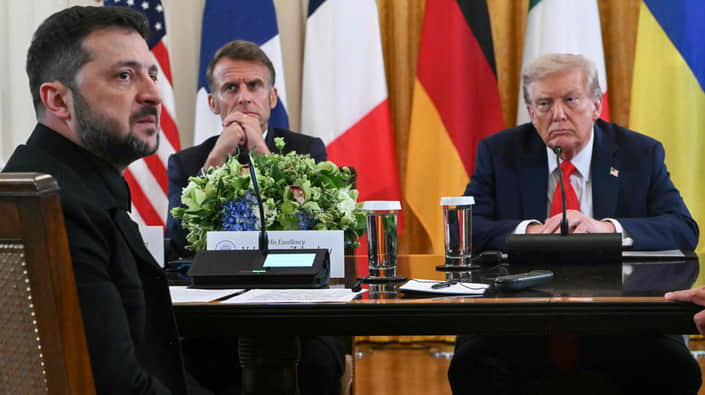
The intentions of the President of the United States to bring Greenland under American control have sent shockwaves through the transatlantic alliance – NATO.
Although Trump has not formally taken action and has so far only declared such intentions, this alone has already triggered an unprecedented rift that threatens to undermine decades of diplomatic cooperation between Europe and the United States. And if Trump does proceed with such a step, regardless of how it unfolds or ends, it would inevitably destabilize the geopolitical situation.
The consequences would not be limited to the Arctic, which is currently in the spotlight.
Developments surrounding Greenland pose a direct threat to Ukraine’s defence in its war against Russia and force a fundamental reassessment of Europe’s entire security architecture, as well as its relationship with its principal ally, the United States – a role Washington has long played.
The impact of these developments on Ukraine is direct and has several dimensions.
US actions regarding Greenland effectively legitimise aggressive territorial claims by stronger states against their neighbours (and not only their neighbours). This is precisely the logic underpinning Russia’s aggression. Such policies have met with unequivocal condemnation until now.
Moreover, Europe’s involvement in this conflict, even if it has not yet escalated into the use of force, diverts critically important assistance away from Ukraine.
These events call for a fundamental revision of security paradigms, compelling Europe and Ukraine to consider the creation of a more self-sufficient defence architecture. And while a diplomatic resolution of the Greenland issue remains the most desirable scenario, even under this outcome the current developments will have long-term consequences and require a strategic shift toward European leadership in continental security.
After all, the traditional role of the United States as the guarantor of security, a role Europeans have long been accustomed to, can no longer be considered reliable.
The collapse of Western unity and the impact on Ukraine
The unprecedented move by the United States to acquire Greenland – whether through purchase or coercive annexation – has introduced a profound destabilising variable into an already fragile global order. While the specific mechanics of this potential acquisition remain opaque, the geopolitical shockwaves are immediate.
This decision does not merely represent a bilateral dispute between Washington and Copenhagen – it signifies a potential collapse of the transatlantic unity that has defined global security for decades.
The decision of the US to challenge the territorial integrity of a NATO ally directly affects the possibility of Ukraine defending against Russia, fundamentally altering the calculus of the war. Regardless of the outcome of the Greenland bid, the consequences for Ukraine, and largely for Europe, are negative, corrosive, and likely lasting.
Historically, the unification of the United States and Europe has constituted the world's most formidable geopolitical bloc.
Together, NATO, the EU, and their allies command nearly 60% of global GDP and possess unmatched military capabilities.
There was virtually no issue in which the combined political will of the US and the EU could be prevailed over by any rival power.
Until recently, Russian aggression had been rolled back largely due to the immense sacrifice of the Ukrainian people, bolstered by the unshakeable Western solidarity. However, the lack of a single voice in the West has already caused significant disruptions in policy effectiveness against Russia.
The first year of the new Trump administration has been remarkably turbulent in relations with Europe, characterised by transactional diplomacy that often treats allies as rivals.
This weakening coordination has handed Russia a golden opportunity to reclaim the diplomatic initiative, allowing Moscow to effectively deploy a "divide-and-rule" strategy that exploits the widening gap between Washington and Brussels.
Crucially, the US pursuit of Greenland inadvertently validates the Kremlin’s narrative regarding the invasion of Ukraine. By elevating the argument that a great power can annex territory for "reasons of its own security," Washington mirrors the very rationale Vladimir Putin used to justify his assault on Ukraine.
This pivot creates a dangerous moral equivalence, one that portrays Russia not as a rogue state violating international law, but as a rational actor behaving exactly as a country with military capabilities can do. It effectively neutralises the West’s moral high ground. Moreover, it gives Russia a powerful psychological boost to continue its invasion, reinforcing the belief that might makes right.
This shift creates a permissive environment for other revisionist powers as well; if the US disregards the sovereignty of an ally for security reasons, it becomes increasingly difficult to argue against China’s potential ambitions toward Taiwan based on similar "essential security" claims. In this new landscape, international law and moral arguments appear to be totally disregarded.
The weakening of Europe, the strengthening of its enemies
The current situation does more than just damage the basic underpinnings of the alliance – it creates a significant, tangible problem for keeping the West focused on helping Ukraine defend itself.
We have already witnessed how the war in Gaza and the escalation between Israel and Iran caused the world's attention to drift away from Eastern Europe. The issue of Greenland, however, threatens to move the focus from Ukraine more dramatically than any other conflict before it.
Because this dispute strikes at the heart of NATO’s internal cohesion, the political impact will be much stronger and more distracting than external crises.
Europe has been the core supporter of Ukraine for the last couple of years, intensifying its efforts significantly over the last twelve months. However, the Greenland crisis will likely force European capitals to dedicate less attention to Ukraine and more to their own immediate territorial security.
While Ukraine’s defence is integral to Europe’s security, the threat of an ally annexing sovereign European territory presents a security dilemma of a different order.
As the Trump administration announces tariffs on European countries that support Denmark in defending principles of territorial integrity, it is virtually impossible to envisage effective coordination on Ukraine between US and European leaders. In this context, Ukraine will need to fight to keep Europe’s attention at least to the same level as now.
These tensions – mutual tariffs, diplomatic insults, and a lack of strategic coordination – will inevitably have repercussions on the practicalities of the war effort.
Just last week, President Zelenskyy appealed to Ukraine’s partner countries to make new contributions to NATO’s PURL initiative. This critical mechanism allows for the shipment of US weapons to Ukraine based on a payroll scheme funded by partner countries, mostly in Europe.
PURL was a successful hybrid scheme which allowed Ukraine to access specific capabilities that only the US possesses, ranging from interceptors for Patriot systems to HIMARS ammunition.
However, in the current climate, the mechanism is largely doomed.
It is quite difficult to imagine that any EU country will make new financial contributions to PURL – effectively subsidising the US defence industry – at the same moment President Trump is pitching Greenland’s annexation and imposing punitive tariffs on them.
The distancing of Ukraine from the US supply chain did not start today – it was spotted during the Biden administration when partisan gridlock delayed support packages. But under the current administration, the speed and scale of the withdrawal were highly underestimated. In these conditions, it becomes plausible that European countries will refuse to purchase US-made weapons to support Ukraine, opting instead to invest in their own industrial bases.
The consequences for Ukraine will be deeply negative, weakening its ability to offset Russian attacks in the short to medium term.
Re-evaluating the future: a security architecture in Europe without the US?
The current dispute between the US and the EU has far-reaching consequences for any future peace settlement between Ukraine and Russia. The US has long been labelled, for good reason, as the key actor for providing credible security guarantees to Ukraine.
European leaders made repeated, strenuous efforts to anchor the Trump administration in this process, often swallowing bitter pills to do so. Accepting unfair trade deals was only one example where the EU took a step back to preserve transatlantic unity.
Ukraine did the same: the deal on critical minerals and various concessions made in the negotiation process, without receiving a single reciprocal concession from the Russian side, were all designed to keep the US engaged and committed.
However, the price for US engagement is becoming unattainable for both Europe and Ukraine.
Ukrainian leadership likely never envisaged a scenario where they would be forced to choose between the United States and Europe, or that their concessions would only lead to demands for further concessions to keep the US on "our side".
This transactional relationship no longer serves the purpose of stopping the Russians or strengthening European security. Ukraine is undeniably a European nation, it will side with Europe not only because the EU represents its most reliable future partners, but because Kyiv has no moral arguments to do otherwise.
Therefore, thinking about security guarantees without the United States, albeit painful and difficult to imagine, needs to be considered as the main planning scenario.
After the US administration displays intentions to acquire the territory of another NATO member, there are very few reasons to believe it would be serious about honouring Article 5 or any other security promise to Ukraine – even after someone like Dimitriev will offer to the US a great deal that would allow it to earn billions in rare earth or similar.
In theory, there is still a chance to ease tensions.
This grim scenario must be prepared for, even if the US and the EU eventually manage to find a civilised solution over Greenland.
Ideally, tensions could be diffused if the US were to lead a NATO mission in Greenland rather than seeking ownership.
This would grant Washington control over the security situation there and provide a strong sense that US security concerns are being met within an alliance framework.
Ukraine could even be a strong contributor to such a mission, particularly regarding drone operations, where the Ukrainian military has shown exceptional skill.
But until such a compromise is reached, Europe and Ukraine must prepare to stand alone, recognising that the era of American security guarantor may be over.
Leo Litra,
Senior Research Fellow at the New Europe Center,
Visiting Fellow at ECFR