Lawsuit against Russia and investments in Ukraine: 10 years of AMIC ENERGY on the market
SPECIAL PROJECT
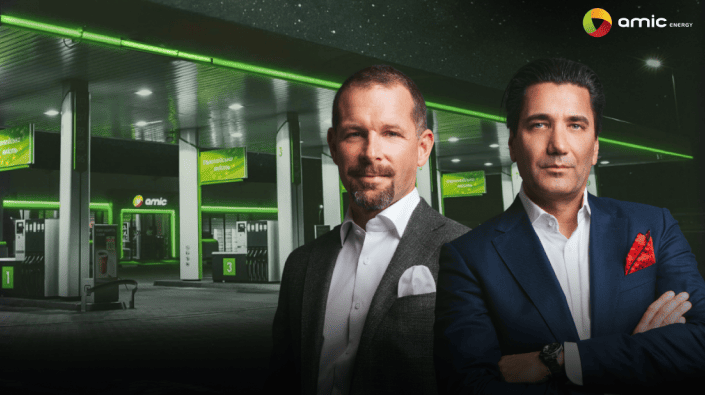
The Austrian company that owns the AMIC ENERGY petrol station chain has been operating in the Ukrainian market for ten years. It has weathered revolutionary changes, the outbreak of war in Ukraine’s east in 2014, and Russia’s full-scale invasion in 2022. Despite numerous challenges, the company not only remains active in Ukraine but continues to grow, investing in its network and supporting the Armed Forces of Ukraine.
In an interview with Ukrainska Pravda, AMIC ENERGY Holding GmbH shareholders Günter Maier and Andreas Zernetz share their experience of operating during the war, outline their plans for further development, and respond to allegations of possible ties to Russia.
Read more about the future of Ukraine's fuel sector and the improving investment climate in the article.
Watch the full video interview with AMIC ENERGY executives here.
How is Amic Energy doing amidst this invasion?
Günter: As Amic Energy, we are doing good. The year 2024 was difficult, as it was for everyone, but we were very happy to see that our sales grew by 10% from 2023 to 2024. This was better than our competitors did, so it’s obvious we’re doing something right. Apart from that, 2024 had its challenges, such as dealing with the aftermath of the attacks. One of our oil terminals was shelled and totally destroyed. Twelve of our stations sustained varying degrees of damage as a result of shelling – indeed, we repaired everything.
Then there’s the new tax regulation in Ukraine – we’re now paying more taxes up front, which is a good initiative given the emergency situation in the country that we are all facing.
Overall, we are very happy to see Ukraine developing despite all the difficulties. Markets are going up, consumption is going up, and we are investing in our network to be ready for the future.
You started as an investment company. What prompted you to enter the petrol station business in Ukraine, particularly by acquiring stations previously owned by a Russian company?
Günter: I’ve always worked in energy, as has my colleague who co-founded the company. We were teaming up there as a group of experts in finance, energy and law.
We founded the company in 2013. But the preparation was already starting in 2011 and 2012. We were looking for opportunities where we could arrange club deals for investment together, meaning like a leveraged buyout fund.
You would basically look for assets where you have the possibility to improve and restructure – this is called distressed assets. You would then try to get, you know, either just your own investments or additional investors in and, of course, also financing from banks. This is how it all started.
It’s sad to say that the opportunity to acquire Amic Ukraine came from the start of the war already in 2014. That was the reason why the seller was considering selling it, and we basically took the opportunity, having thought it through, in a way that our risk was managed. I can say that at that time, I was not very positive about making these acquisitions because it was looking very difficult. Stations and the station network itself were empty. It was, so to speak, technically bankrupt. It was a so-called white pumper, which means that there was no brand on it anymore because the seller had to remove the brand because of the start of the war in 2014. But we successfully took it over and started then simply just to restructure the network and the company. We were saving on costs; we were bringing a new brand to Ukraine; we were developing all this quite quickly, because it was necessary in order to bring it up again. And with all the ups and downs of the years since we bought it – the deal was finally closed in 2015 – we think that it is a good success story to be here and basically to continue our operations and grow the network and our business.
So it wasn’t an impulsive purchase. It is always difficult in the energy business when you are taking over a business in a market which is kind of stressed or distressed. But on the other hand, this is also where the opportunity lies. You cannot have a reward without risk. As a group, experienced in Eastern Europe already for decades, so to speak, we are not that young anymore. So we have been working with Austria and Eastern European countries from the beginning of our activity.
Ukraine was a new land at that time; there were not so many volunteers at that time going and acquiring. But that is, of course, also what brings opportunity to private and independent companies. And when we look back, we are happy that we did it.
As we already mentioned the acquisition, we can't but address the lawsuit against Russia in the European Court of Human Rights. Can you tell us what the current stage of this lawsuit is? And how does it fit in one picture with some allegations about connections to Russia – that you are withdrawing your profit to the Russian Federation?
Andreas: I start with the lawsuit at the Court of Human Rights. We filed this lawsuit two years ago because of the damage to our assets – the loss of petrol stations in the temporarily occupied territories. It is called "Amic Ukraine against Russia". It was filed; it was accepted; and they're currently working on it. As you know, these lawsuits take a long, long time, so the actual status did not change, but we are looking forward to any progress in the near future.
For the other accusation we had here – the pre-investigation against Amic from the ESBU (Economic Security Bureau of Ukraine) – we have to say they are primarily economic in nature – it's all about evading taxes and paying dividends. About two years ago, the ESBU made this accusation against us, and we had a lot of tax audits in the recent year. We also had a very comprehensive documentary tax audit that started in 2023 and was completed in 2024. There were no findings, first of all, in terms of taxes, and also no findings of paying dividends to anybody. Not to Austrian shareholders – there are only European shareholders – and not to any Russian individuals.
Maybe it's not easy to understand that we have been operating this company for ten years without any dividends, not a single penny, but we invested all in the network. As Günter said, we had a very challenging target – like a white pumper, no logo, technically bankrupt – so we had to invest in a new logo, new fuel supply, new stations, new commercial papers and everything. So it took all the money. We already closed two of the four episodes of the accusation and pre-investigation of the ESBU, and we are happy that these points are closed. We had a very in-depth custom audit. Again, no findings; everything was correct; no money was transferred anywhere; and all these papers are being prepared and sent to ESBU. We are in very good hope that the prosecutor’s office and the ESBU will close the other two accusations in the state of a pre-investigation, and we are getting rid of this episode.
Can you talk about which assets are now in the occupied territories – how many petrol stations, etc.?
Günter: There are 19 stations in the temporarily occupied territories. There are also 12 stations which are damaged at the moment. We are always rebuilding or renovating the stations. It is just important that it is out of the fight zone or not too close to zones where there is a risk.
We have also rebuilt, as we have already said, 12 stations in 2024. There are also 12 stations planned for 2025. We are also rebuilding a Vorzel station that is near Kyiv and that was completely damaged in 2022. So we're building a brand-new station on that.
And we are also expanding the network potentially by doing additional acquisitions when such smaller networks or single stations are offered to us. There is, at the moment – as you may know – a bit of change and consolidation in the market. There are some stations available. So we look at that and we will see what we can do on that.
Andreas: Let me add that 12 stations are damaged or close to the risk zone at the front line. And even today [10 April 2025 – ed.], in Mykolaiv Oblast, a station was hit by the explosion of a Shahed drone. But we’re constantly trying to reopen these stations and work with as many stations as possible. At the moment, we have 201 open stations.
Let’s talk about your assets which are not in the occupied territories. It was the issue of the seizure of the Amic assets. What is the current situation now?
Günter: The current situation is that, as we said before, it is a pre-investigation against our company. However, with the start of the war, pre-trial pre-investigations started against more than a thousand companies and more than 3,000 individuals. I also think we are pre-investigated because originally we bought from a Russian company. That’s the only reason.
About the assets themselves, it is correct to say that a temporary arrest on our assets is still in force. It actually means three parts: there is the share capital, the real estate, and the trademark.
However, this is not hindering us from doing our business just like we do it. We are fully operational. We are investing in the network, we are trying to expand the network, and we are expanding our offers on the shop side and focusing on the quality of our fuel.
Coming back once more to the situation of the temporary blockage of our assets, it was because of a pre-investigation. Our case was, for whatever reason, pushed to a high-profile case in the media. The topic of the case – or the pre-investigation, as we said before – is purely economic. It is taxes and dividends or paying dividends. It is easy for us to prove that everything was right with taxes. It is easy to prove that there was no payment of dividends over the years because we have just reinvested it in the network.
When I come back to the tax topic, I would say that the financial statements of our company confirm that everything was correct with the taxes. And this is audited by an international auditor every year. We had regular tax audits for all the years. We had a very detailed documentary tax audit in 2023 covering all the periods. All this confirms that we did everything right.
In addition to that, we were also awarded by this comparison, being one of the most efficient taxpayers in Ukraine for many years.
We were always among the top three. This is also confirmed by members of the parliament, who are experts in this field.
We see the temporary blocking of our assets as a temporary thing. As my colleague Andreas already said, we have closed half of the topics which are under this pre-trial investigation. We’re cooperating very proactively with the SSU (Security Service of Ukraine) and the General Prosecutor’s Office. We’re providing all the information. There was also a comprehensive documented customs audit, which was very detailed. We are now also providing this information again to the authorities.
Last sentence on paying taxes: it is our pleasure that we increased business from 2023 to 2024 by about 10% of sales. As for an important employer in Ukraine, this means not just jobs for our employees and not only expanding our customer base, but it also means expanding the tax payment which we are doing. In 2024, we paid 2.5 billion Ukrainian hryvnias in taxes, which is 58 million euros. It’s a substantial amount, which is hopefully helping the Ukrainian state.
What do you think about the nature of these criminal proceedings, and why haven’t your assets been released yet?
Andreas: I think it’s very easy to answer – they’re groundless, and they are coming because we bought the assets from a Russian company. That’s the only connection to Russia there is. After the full-scale invasion, Ukraine wanted to make sure that there were no connections. They did make sure, and now the time it takes to free our assets is based on the fact that it’s a very hard decision to close these cases for the authorities. Not because there are any doubts, but because…
It’s a procedure.
Andreas: It’s a procedure, and procedures take a long time. We filed a lot of information, and they have to work on it. But the accusations are partly closed, and the second part is just about to come.
What’s your current relationship with the Economic Security Bureau and the Office of the Prosecutor General?
Günter: I would say we have a professional communication relationship. We are simply acting proactively according to the procedure, and I also believe the ESBU and the general prosecutor are doing the same.
As my colleague Andreas said, it’s easy to show that the accusations are groundless, but it is necessary to document all that in detail, and it’s necessary to go through the procedure.
Despite all these accusations, you still continue to invest in Ukraine. Can you elaborate on this: what do you do here, and maybe what your plans are for the future?
Günter: On investing, and why do we invest. First, I should say that we very much believe in Ukraine. It’s a very huge market, with great people, a lot of innovation and potential for the future. We believe that when the war ends, Ukraine will skyrocket. We’re not the only ones who figured that out. There are a lot of other companies waiting to jump in. But we do not need to jump in because we are already here, and we already have a significant network in the country.
We will build on that. When it comes to further investments, we are considering, on one hand, expanding the business in real estate. We believe when there are good opportunities to buy, we will have a look at them, and if it makes economic sense, we can do that.
The other thing is that we are also active in four more countries. As you know, we are active in Austria with EV charging stations; we’re active in Poland, Lithuania and Latvia. And we also see that we can bring some of the successful concepts from these countries to Ukraine.
We’re thinking about, for example, on the food side – bringing American pizza Sbarro. It’s an international partner we are working with in Poland, and we are considering that in Ukraine. We already have one station where we believe it would be a good idea to have that, because it’s a huge-sized station. We are also working with the international brand Subway in Poland, so that is also a possibility to bring to Ukraine. We’re also improving the stations themselves – we are changing the design to a modern design, bringing it to a loft-style kind of station interior. To answer the question from before: we simply believe in Ukraine and the Ukrainian market and the Ukrainian people, and we believe that Ukraine will be successful despite all the issues.
Andreas: Maybe to add, we’re also thinking about adding EV charging stations in Ukraine. We’re doing it in Austria and Poland, and we believe this is also a very good market in Ukraine. We see a lot of EV cars driving around the streets, and it will be a business case in the near future.
Maybe you’re considering some investments outside the energy sector?
Günter: We do that. We’re also active in real estate, but that’s rather in Austria and Germany at the moment. We have already thought about real estate in Ukraine, but I have not concretised these ideas. Apart from that, we focus at the moment on energy. Because this is the business we understand and it is large enough.
Andreas: Next to the petrol station in the energy sector, we do photo power plants, including power storage. We have some projects in the Baltic states, and that's the way to go.
How different are the Ukrainian market and the EU markets? And how differently do you manage those assets in the European Union and in Ukraine?
Andreas: I would say Ukrainian markets are even more competitive than the European markets. We see a lot of very nice concepts from our competitors here. We have a lot of customers going to the station, using the food offer, the coffee and things like this. This is even more popular than in European countries. And we think that Ukrainians are by far more digital natives than, for example, people in Poland. So the outdoor payment terminal possibilities are very important. The loyalty app is very important to attract customers not only at the station but also in a digital way to get them to the station. That’s much more advanced than we see it in the other countries we are active in.
We already talked about the investments. But as far as I know, you also support the Ukrainian Armed Forces. Can you elaborate on this question, because it's also important?
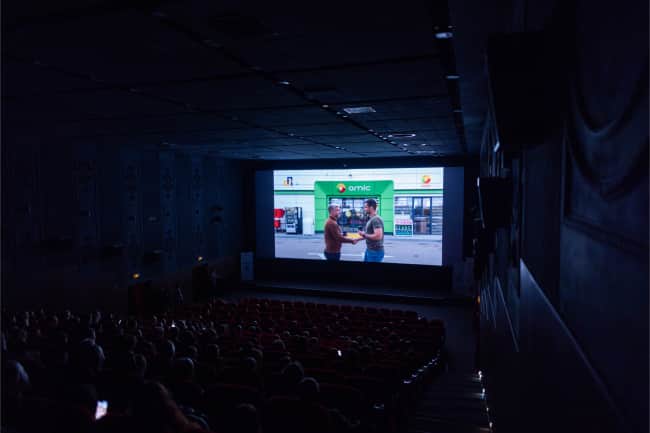
Andreas: We have three big initiatives. Let's start with the cultural initiative first because it's happening this week–the Austrian Film Week. We are a proud partner. We strongly believe that in times of hardship, a cultural event can remain the bridge between countries, and we're very proud to take part in this festival.
The second one is our charity initiatives. Invincible Coffee, for example, with the Serhii Prytula Charity Foundation, where we donate a certain amount for every cup of coffee bought in our stations. We provide materials for shelters and hospitals and also equip commander cars.
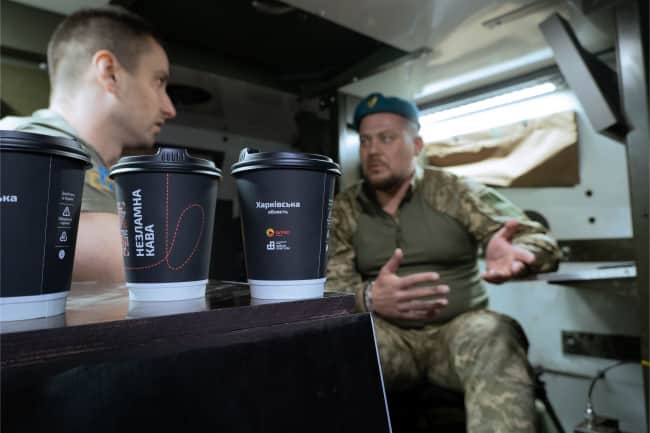
The third initiative is our ongoing support for the Armed Forces of Ukraine, where we provide fuel, of course, because we're a petrol network, but also Mavic From Amic drones and other things which are needed by the battalions our employees serve in.
These are the three main chapters, and we have spent over 30 million hryvnias (about US$724,357) on these initiatives so far.
Günter: In addition to the number Andreas mentioned already before, I wanted to say that the overall amount of charity, all that together – not counting our own employees – is about 3.3 million euros. That is a significant amount for us because we should also mention that we had significant damage. The damage is about – we believe it’s sometimes hard to assess because we cannot even reach our stations – but it’s about 20 million euros, which we estimated as losses over the last three years. So this 3.3 million euros is a separate sum that shows that we want to make a contribution to helping Ukraine.
We have already talked a little bit about modernising the petrol stations. As a petrol station company and an energy company with petrol stations, how do you see the petrol station of the future? What should be there?
Andreas: We strongly believe, and we can see it in different markets, that the petrol station of the future will be a mobility service station. There will be much more offered than the previous time, where actually there was fuel, motor oil, and maybe some spare parts.
It's going to be fuel, it's going to be power for electric vehicles, and it's going to be a variety of food. If you're seeing stations of ours in Poland, we have Subway and Sbarro as food offering. We have the first station in Poland with a pizza drive-through. About 75% of our stations have third-party delivery – so you can order your pizza at the station and bring it home.
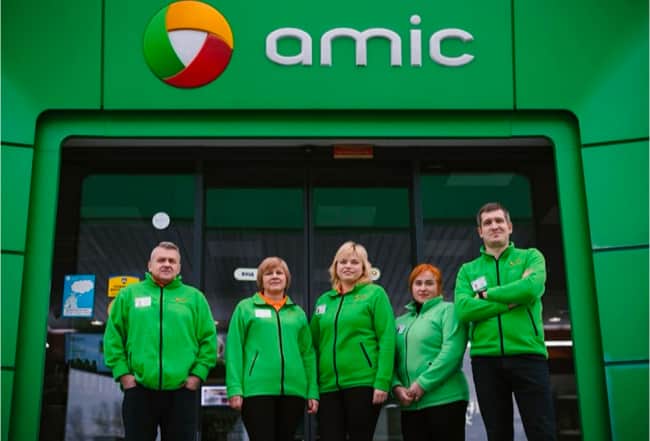
There are also parcel services; there are cash machines. So a station will attract many more people than just people looking for fuel. It will attract those looking for food, maybe for cash, maybe to pick up their Amazon parcel. So I think it's going to be a mobility and service station with a wide range of offerings. It's a much better utilisation of the real estate than only offering fuel. That's going to be the future in Ukraine and anywhere else too.
Yeah, because as far as I see, some people – for example, in Ukraine – they choose where they will get their fuel depending on which kind of food they also can get at the station.
Günter: As long as the food quality is okay, this is very much understandable. And I believe another advantage which we see in Ukraine, but also in Poland, Latvia and Lithuania – you have a lot of space. Normally the station plots are anyway much larger than they would, for example, be in Austria.
So there is the possibility to add, as my colleague Andreas already said, additional services, such as EV charging and delivery.
It can be like a pick-up point because you still need to go there, so why not receiving your parcel there? Then you also have food, drinks anf coffee there – it is a kind of point of sale, point of meet and point of delivery. This is how we see it in the future.
You’ve already mentioned that some other businesses could invest in Ukraine in the future, possibly. From your perspective, what should our government do to attract these companies to Ukraine?
Günter: I believe what’s very important for investors in general is stability and investment security. I’m not talking here about the war because I understand it’s a bit out of control for everybody, but I’m talking more about the system of law, the rule of law, and the tax system. It’s important that everything is fully transparent, stable, and unified around the country, and that the tax system works in the easiest and most efficient manner.
I also believe it’s important to eventually establish with other countries some kind of insurance or investment security guarantees, especially once a ceasefire is achieved. Export credit agencies from different countries could then insure part of your investment, depending on the amount and depth of the structure.
I believe it’s also important not to put unjustified or unlawful pressure on foreign investors. Our case is an example of how investors are not attracted. When you work in a country for a long time and have good relationships, for example, when the war started in 2022, we were participating in all the important meetings and conferences about how the fuel supply could be achieved. Just two months later, we were pre-investigated. We understood why, but it wasn’t just us; many other companies experienced the same. But I believe it’s important not to pressure foreign investors unjustly. My simple message on this is: don’t put pressure on your friends; focus on your enemy.
Andreas: I think the most important thing is that investors can be sure that law and justice prevail, and if you can prove everything is correct, there are no threats against you.