Russian technologies inside the EU: Is Germany ignoring the risks of cooperation with Rosatom?
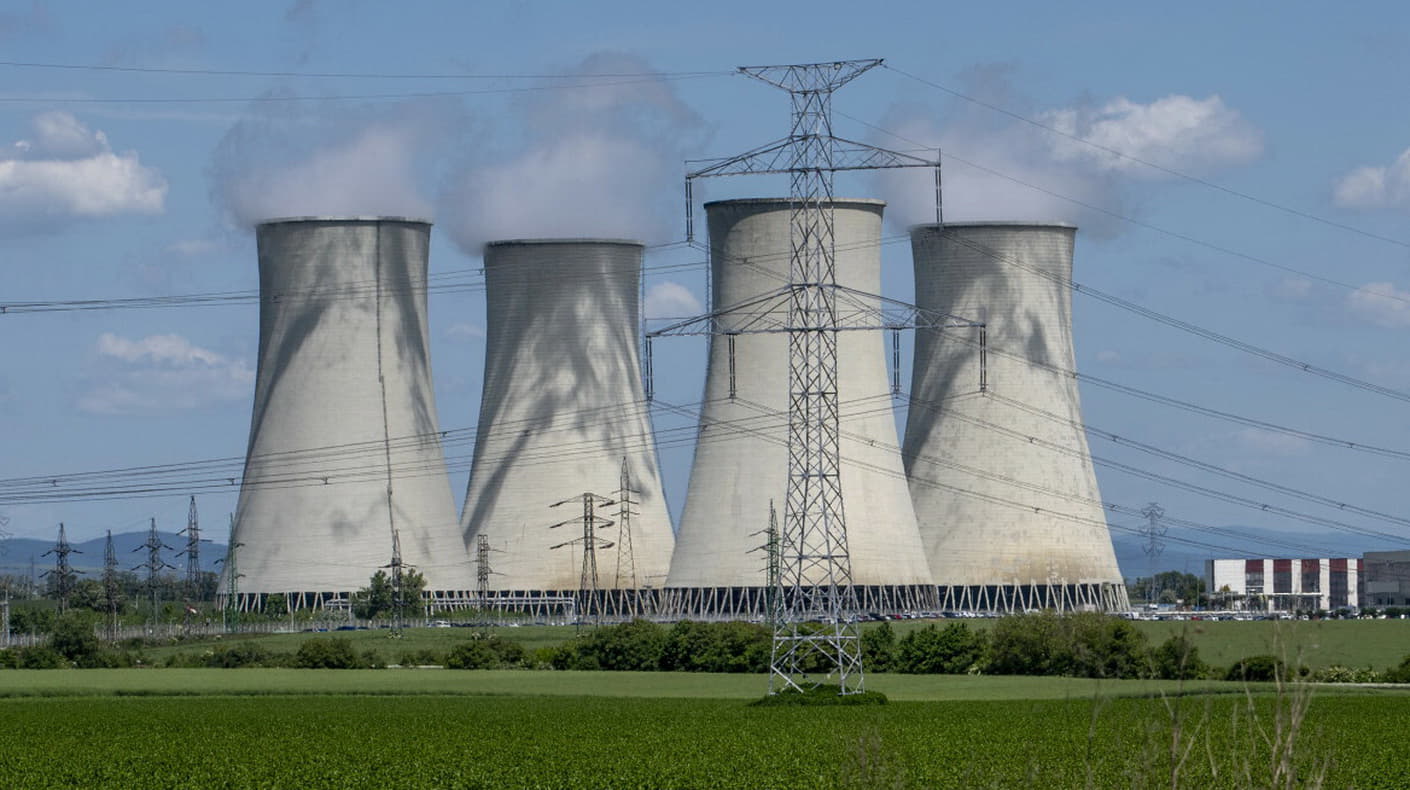
Since the beginning of Russia’s full-scale invasion of Ukraine, the European Union has been steadily reducing its dependence on Russian energy resources.
Gas, oil, coal – in almost every sector, this course has already become irreversible. Nuclear energy remains one of the few exceptions. This is precisely why the decision to allow French company Framatome to expand the production of nuclear fuel for Soviet-designed VVER reactors in Germany has sparked such a heated debate. Supporters of the project describe it as a step towards diversifying fuel supplies for European nuclear power plants. Yet there is a fundamental question:
Can this truly be called diversification if the new production relies on technologies provided by Russia’s TVEL, the nuclear fuel division of Rosatom?
The license published by the Lower Saxony authorities helps provide an answer.
The Most Interesting Part Is Not the Decision Itself, but Its Conditions
The public debate often revolves around whether cooperation with Rosatom creates additional security risks. Paradoxically, the most compelling answer comes not from the project’s critics, but from the German licensing authority itself.
The document examines in detail scenarios involving potential manipulation of fuel components, risks associated with the use of Russian equipment, espionage, sabotage and cyber interference.
It establishes specific additional security requirements for each of these scenarios.
For example, for certain VVER fuel designs, finished welded gadolinium-containing fuel rods will be supplied by the Russian manufacturer MSZ (Mashinostroitelny Zavod), which is part of TVEL. The permit specifically considers the risk of deliberate manipulation of these rods before their delivery to Germany, including the possibility of placing foreign substances or materials inside them, including explosive materials.
This is why 100% scanner inspection of such rods is required. In addition, one rod from a batch may be opened and internally examined as a sample.
Another scenario concerns the equipment and software supplied by TVEL for the manufacturing process.
The permit takes into account the risk that such equipment or software could theoretically be deliberately modified before arriving at the Lingen plant in a way that could affect the characteristics of the manufactured fuel elements or result in the production of defective fuel assemblies. Hardware components of the control systems must therefore undergo independent inspection. The source code, including software for programmable logic controllers and visualisation systems, must also be independently reviewed for hidden, modified or functionally unnecessary elements. The IT/OT infrastructure supplied by TVEL must also be separated from the plant’s other systems.
A separate set of conditions addresses the risks of espionage and sabotage.
Representatives of TVEL, Rosatom and persons associated with them are prohibited from accessing the facility, while contacts with them (both by telephone and in writing) are restricted to what is strictly necessary and must follow the "four-eyes principle".
However, this prohibition is not absolute. Access may still be granted in exceptional circumstances, subject to a dedicated risk-mitigation plan, a reliability assessment by the Lower Saxony Environment Ministry and prior approval by the nuclear supervisory authority.
Such mechanisms reduce the risks but do not eliminate them entirely,
as the human factor and the need to ensure compliance with the established rules remain.
In other words, the permit does not deny the existence of risks.
On the contrary, it assumes that they are serious enough to require specific control mechanisms. This is a crucial distinction. The document does not claim that Russian technologies automatically make production unsafe. But it acknowledges that their use creates new risk scenarios that would simply not exist without this cooperation.
The measures imposed by the permit conditions may significantly reduce the likelihood of such scenarios realisation, but they are designed to manage the risks rather than eliminate their underlying source – a Russian state-owned company.
It Is Not Just a Security Issue
The economic dimension is equally important. The expansion of the Lingen plant is presented as a way to reduce dependence on Russia. Yet the new production relies on Russian manufacturing licences, know-how, specialised equipment and certain components. In other words, part of the technological dependence does not disappear; it is merely relocated to the territory of the European Union. German officials themselves have raised this concern, and the issue therefore remains a matter of debate within Germany itself.
There are, however, fundamental limitations inherent in the German licensing procedure. The decision explicitly states that energy dependence and the security of European energy supply are not among the criteria considered when granting the permit. This means that strategic, economic and geopolitical risks are not assessed as part of the licensing procedure for nuclear fuel production. Nor does the decision assess whether a model of long-term technological cooperation between Framatome and Rosatom is consistent with the strategic interests of Germany and the EU, because this question lies outside the scope of the procedure.
This raises the central strategic question: if, in a few years, the EU tightens restrictions on the Russian nuclear sector or decides to phase out such technologies entirely, how quickly could this production model adapt? And could investments made today have to be scaled back long before they have paid off?
There are currently no answers to these questions.
Is Europe Supporting Two Different Visions of the Future?
The REPowerEU roadmap for ending Russian energy imports, presented in May 2025, envisages reducing dependence on Russia, including in the nuclear sector.
At the same time, the European Union is already funding the development of fully European fuel for VVER reactors. In particular, the SAVE project, funded under Horizon Europe and coordinated by Framatome itself, aims to develop fuel based on a European design, European manufacturing and a supply chain free from Russian technologies.
The Lingen project therefore goes far beyond the question of whether a particular manufacturing operation formally complies with the requirements of a German permit. The real issue is whether creating a new technological dependence on TVEL is consistent with the direction in which the EU intends to develop its energy policy.
In practice, two different models for the future of European VVER nuclear fuel production are currently being realised. The first envisages a gradual phase-out of Russian technological dependence. The second integrates part of that dependence within the EU itself. Both approaches cannot remain equally relevant indefinitely.
Sooner or later, a choice will have to be made.
Lingen Is About Much More Than One Plant
The debate surrounding the project has long moved beyond the question of a single additional production line. It is about how Europe defines its strategic autonomy.
This is where the logic of the manufacturing permit collides with the EU’s broader strategic logic. The licensing authority is tasked only with determining whether specific security risks can be mitigated to an acceptable level – and, as discussed above, it cannot completely eliminate their underlying source.
European policy, by contrast, must answer a different question: should these risks be created in the first place by establishing a long-term dependence on Russian technologies within critical infrastructure when the EU’s strategic objective is to move in the opposite direction?
The debate over the expansion of production in Lingen therefore did not end with the issuance of the permit. The security conditions imposed leave space for a legal assessment of whether they are sufficient to meet the standards of Section 7(2) of the German Atomic Energy Act. A legal challenge to the decision could therefore be one of the next steps.
At the political level, an even broader question remains: does the very fact that such a decision was taken contradict Europe’s overall course towards ending its dependence on Russian energy resources? This question is particularly relevant against the backdrop of Russia’s intensifying sabotage and other hybrid operations across Europe.
By Mykhailo Babiichuk,
General Manager on Security and Resilience, Kyiv-based think tank DiXi Group
This material was prepared by DIXI GROUP NGO with support of the International Renaissance Foundation within the framework of the project "Strengthening Ukraine's Resilience in Energy". The material reflects the views of the authors and does not necessarily represent the position of the International Renaissance Foundation.