Is Russia preparing for war with NATO? What’s behind large-scale military exercises in Belarus
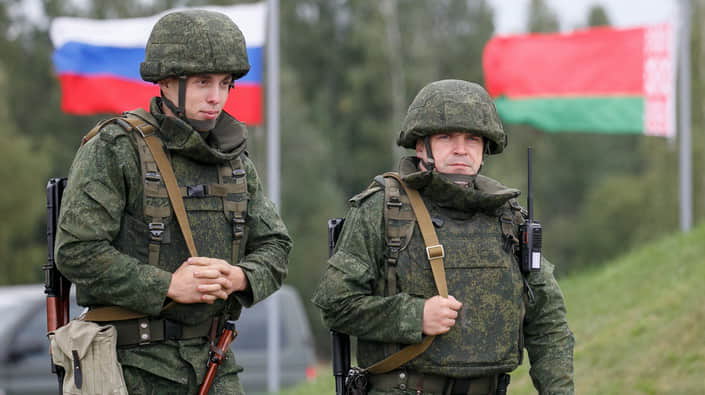
This September, Belarus is set to host the next Russian-Belarusian military exercises known as Zapad-2025 (West-2025).
Similar exercises in 2022 served as the final preparations for Russia’s full-scale invasion of Ukraine, and the upcoming drills will be the first large-scale manoeuvres in Belarus since the war began.
So it’s no surprise that these exercises are drawing significant attention not only in Ukraine, but also across the EU and NATO.
Back in April, President Volodymyr Zelenskyy warned that Russia might be planning aggressive actions under the guise of drills. "NATO will remain vigilant and continue to monitor developments closely," the Alliance stated.
It’s worth noting that concerns about these exercises escalating into real military aggression are generally not about the risk of a new front opening against Ukraine, but the possibility of aggression against Belarus’s EU neighbours, Poland and Lithuania.
But are those fears justified? Under what conditions could such a scenario play out?
A tradition of threatening NATO
The decision to hold regular joint Belarusian-Russian exercises dates back to 2009, and Union Shield or Zapad drills have been held as strategic-operational manoeuvres every two years since then.
Serious concerns about these exercises were first raised in 2017, when the then-Commander-in-Chief of Ukraine’s Armed Forces, Viktor Muzhenko, warned that they might be a cover for actual Kremlin objectives.
In fact, these exercises were designed from the start as rehearsals for warfare against NATO countries.
For example, the Zapad-2021 drills, which involved a record 200,000 troops from Russia, Belarus and Collective Security Treaty Organisation (CSTO) allies, were based on a scenario in which a fictional Polar Republic attacked the "Central Federation".
But Zapad-2021 did in fact become a preparation for the invasion of Ukraine. Some Russian battalions remained in Belarus afterwards, positioning themselves near Ukraine’s border.
Later military drills, on a smaller scale, served as a cover for launching the full-scale war in 2022.
No major military exercises have taken place in Belarus since the invasion. The Union Shield-2023 drills were cancelled, and there were no major operational or strategic manoeuvres in 2024 either.
In place of large-scale exercises, since February 2022 there have been smaller manoeuvres involving specific branches of the military, mainly the air forces.
For instance, joint air-tactical drills were held in Belarus in early 2023, and Russia deployed Iskander-M missile systems there. The exercises shifted focus from defensive to offensive operations.
As a Pentagon leak later revealed, these activities were aimed at convincing Ukrainian intelligence that there was a real threat of renewed invasion from Belarus.
The icing on the cake was the announcement that tactical nuclear weapons would be deployed in Belarus.
The unusually strident information campaign accompanying this, which is not at all typical for this sort of action, was especially striking.
A similar pattern was seen in May 2024, when drills were suddenly held to test non-strategic nuclear weapon carriers. Though no proof of actual nuclear weapons being stationed in Belarus emerged, the Belarusian military clumsily tried to present fuel tanks on Su-25 aircraft as nuclear bombs.
Thus, since 2022, military exercises in Belarus have primarily been used as a tool to pressure the West.
Will Zapad-2025 be any different?
The threat is real, but not immediate
The key question is whether Russia, given its current resource constraints, can deploy enough troops to pose a real threat to NATO member states.
Unlike the 2021 cycle, when trainloads of Russian equipment had begun arriving in Belarus by July, this year there have been no major deployments, just a few Russian military cargo flights.
Western officials don’t see a serious threat at this stage either.
Secretary General Mark Rutte has said he does not consider a Russian attack on NATO after Zapad-2025 to be a realistic threat.
There have been similar reassurances from Vilnius, where National Security and Defence Committee chair Giedrimas Jeglinskas reported no unusual activity, and from Warsaw, with Polish Foreign Minister Radosław Sikorski saying Russia is "bogged down" in Ukraine.
There were also signs of a lower threat level from Belarus itself. In early July, self-proclaimed president Alexander Lukashenko announced changes to the drill parameters: troop numbers would be halved, and the exercises would take place deeper inside Belarus, far from NATO borders.
Belarus even invited Western observers to attend as international monitors.
However, just three weeks later, Minsk changed its tone. The Belarusian Chief of the General Staff, Pavel Muraveiko, began threatening to move troops closer to the Polish and Lithuanian borders in response to NATO’s upcoming Defender Europe-2025 exercises this autumn.
That reversal proves that the worst-case scenario remains possible.
Even if this year’s immediate security threat is relatively low, the risk of aggression against NATO countries persists, albeit more in the medium to long term.
Moscow continues to use Union State integration mechanisms to tighten its grip on Belarus’s security sector. These military exercises could be another step in that direction.
Minsk’s efforts to balance Russian influence have been weak, increasing the likelihood of Belarus’s further political and military absorption.
That would expand the Kremlin’s capabilities, potentially transforming NATO’s eastern flank into a new flashpoint in its confrontation with the West.
The region’s geography renders it particularly vulnerable: Vilnius is just 50 km from the Belarusian border, and the Baltic states are only joined to mainland Europe by the narrow Suwałki Gap.
The range of possible scenarios is wide, and NATO must prepare now for a potential conflict with Russia and a fully integrated Belarus.
Pavlo Rad, Yaroslav Chornohor,
Ukrainian Prism Foreign Policy Council