No guarantees, no rights: why Ukraine should reject Merz’s EU "associate membership" plan
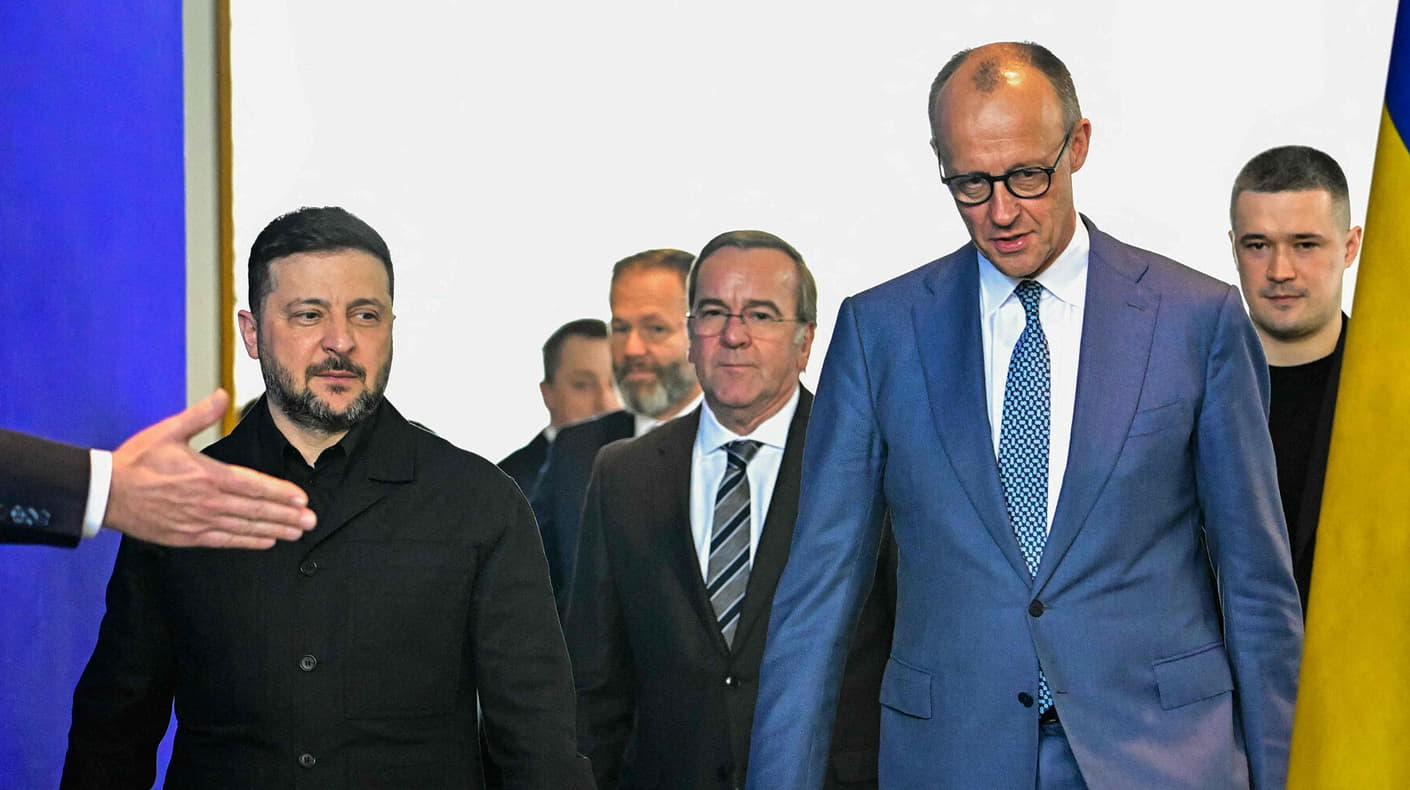
On 18 May, German Chancellor Friedrich Merz sent a letter to three leaders of the European Union: European Commission President Ursula von der Leyen, European Council President António Costa and the representative of the Cypriot EU presidency, President Nikos Christodoulides. The letter was then shared with other EU member states and eventually leaked to the media.
The document, which was intended to remain confidential, outlines over five pages how Berlin envisions Ukraine’s accession to the EU. Merz referred to this format as "associate membership".
However, the German idea is unacceptable for Kyiv.
The problem is not only that the format offers Ukraine very few advantages.
There are also serious risks that Berlin attempted to conceal.
Merz writes that the new format is not a substitute for full membership and would help advance the accession process. But the document itself does not support this claim.
On the contrary: his proposal envisions Kyiv receiving an intermediate status, being stuck in the "EU waiting room", while for the other candidate countries, including Moldova, Berlin proposes accelerated accession bypassing Ukraine.
Moreover, the status proposed by Merz is legally fragile. If there is a change of power in Berlin or Brussels, Ukraine could be left without even these symbolic advantages.
Even the term "associate membership" is odd. Ukraine already has an Association Agreement with the EU. Merz is proposing "another association" without any legal guarantees and without any real benefits.
Despite all this criticism, the fact that Europe is searching for creative formats for Ukraine’s accession is, in itself, positive. The understanding that Ukraine’s accession is necessary for Europe itself is steadily growing in EU capitals. However, in negotiations over the terms, Ukraine should not agree to the first proposal put on the table.
What the debate is about
Discussions about an alternative format of EU membership for Ukraine intensified in April. Media outlets reported on a Franco-German non-paper stating that Europe should integrate Ukraine without waiting for Kyiv to fulfil the accession criteria under the standard procedure.
The document was received negatively in Kyiv. Above all, this was due to its misleading presentation in the Financial Times, where the proposal was described as "symbolic membership", implying that it would serve as a symbol of Ukraine’s future full-fledged accession to the EU.
In Ukrainian, however, the word "symbolic" was interpreted differently – as meaning "small" or "inferior". "Ukraine does not need symbolic membership in the EU. Ukraine is defending itself and is definitely defending Europe. And it is not defending Europe symbolically – people are really dying," Ukrainian president Volodymyr Zelenskyy stated back then.
Terminology was not the only problem. The possible parameters of this intermediate membership format were also uninspiring for Ukraine. Berlin, however, did not abandon the idea. This time, Friedrich Merz decided to act without Paris’s backing and sent EU partners a more detailed outline of his proposal.
The document begins with Berlin’s assurances that Ukraine belongs in the European Union.
"The enlargement process takes much too long… As we are now in the fifth year of Russia's war of aggression against Ukraine, we need to quickly advance with Ukraine's EU membership," Merz wrote, adding that he had already proposed to President Zelenskyy "the idea of what I call an 'associate membership' for Ukraine".
Merz does not specify how the Ukrainian leader reacted to the proposal.
The format he describes in the letter offers little to Kyiv.
He believes Ukraine should gain access to all EU summits, as well as meetings of the Council of Ministers – the EU’s main legislative and political body. However, Kyiv would not receive voting rights, only observer status.
Ukraine would also receive the position of a European Commissioner with reduced powers – again, merely to observe the work of the European Commission rather than participate fully in it. The Ukrainian commissioner would have no voting rights. More importantly, the commissioner would not be assigned a portfolio (a designated EU policy sector), which is what gives the role real substance.
Ukraine would be offered seats in the European Parliament. But these MEPs would also lack voting rights, effectively reducing their influence in parliament to zero. The same principle would apply across all other EU institutions – for example, in the Court of Justice of the European Union, where there would be an associated Ukrainian judge without actual authority.
Ukraine would not gain access to the EU budget or structural funds like full member states do. Assistance projects for Ukraine would remain separate, as they are now.
There is only one sector in which Merz proposes immediate integration for Ukraine: security. Here, Berlin is prepared to involve Kyiv in all processes, including mutual security guarantees under Article 42.7 – the European equivalent of NATO’s Article 5.
Take everything and give nothing in return
Even this brief outline shows that the idea is not particularly attractive. In essence, Kyiv receives nothing. It is "symbolic membership" in the worst sense of the term – precisely the kind of proposal that had already triggered a negative reaction from Kyiv when Merz first floated it.
At the same time, while offering Ukraine participation in none of the EU’s actual policies, Germany wants to strip Kyiv of its main negotiating leverage – security. After all, Article 42.7 implies not only EU assistance in defending Ukraine, but also Ukraine’s involvement in defending other European states from possible Russian aggression.
Most importantly, however, the German proposal contains a hidden trap for Ukraine.
In his letter to EU leaders, Friedrich Merz insists that the new format is not a replacement for or alternative to Ukraine’s full EU membership.
"We want Ukraine to become a full member of the European Union. Therefore, we should, immediately and without delay, formally open all negotiation clusters," he writes. The chancellor argues that the goal of the proposal is to "further accelerate the accession process". Supposedly, Kyiv’s participation in European institutions, even in an observer capacity, would allow Ukrainians to move towards membership more quickly.
But the effect would be the exact opposite in geopolitical reality.
The German proposal explicitly envisions the decoupling of Ukraine and Moldova on their path towards accession. This would be an irreversible process that leaves Ukraine behind the other candidates.
Only Ukraine would receive this "associate membership" and observer role. At the same time, for Moldova and the more advanced Western Balkan candidates, Merz proposes an accelerated route towards full membership. "We suggest that we look into innovative solutions also for those candidate countries… and that we accelerate their accession process," Merz writes.
There are several EU member states, Romania above all, that would welcome such a development.
They would be happy for a "difficult" Ukraine to remain an observer in the EU’s waiting room: without voting rights, without access to European funds and so on. Moldova, meanwhile, would be fast-tracked into the Union.
If implemented, this scenario would push Kyiv backwards in the accession process.
And even if and when Ukraine eventually moved again from observer status back into a full accession track, it would find itself in a new "enlargement package", grouped not with Moldova but with enlargement laggards such as Bosnia and Herzegovina, Serbia or North Macedonia.
Meanwhile, the EU would obtain everything it is interested in. Europe already has access to the Ukrainian market. And Kyiv would be expected to hand over access to its defence sector voluntarily.
"Incomplete membership" without guarantees
There is also an entire legal dimension to the problem. No such term as "associate member" exists within the EU framework. In his letter, Friedrich Merz acknowledges this issue, but expresses confidence that a legal mechanism could be found.
And that is indeed true. There are at least two possible ways to implement the kind of associate membership proposed by Berlin.
One option would be legally impeccable but politically unrealistic. It would require amendments to the Treaty on European Union and the Treaty on the Functioning of the European Union, which in turn would require ratification by all 27 member states and referenda in several of them. There is broad consensus that this is unachievable.
The second option is politically easier.
As is well known, Volodymyr Zelenskyy already frequently attends EU summits, and Foreign Minister Andrii Sybiha is invited to meetings of EU foreign ministers, among others. Europeans could agree that, from now on, invitations for all Ukrainian ministers, as well as lower-ranking officials for working meetings, would become permanent.
But this would be a political arrangement, not a legal obligation.
In three years, the President of the European Council will change, and the successor to António Costa could easily decide that there is no place for the Ukrainian president at EU meetings. The EU treaties would be on their side.
The rotating presidency of the Council of the European Union changes every six months. Who can guarantee that one day a new presidency will not decide to end or restrict the arrangement, especially if Kyiv attempts to defend Ukrainian interests too assertively during meetings?
So even the limited advantages of associate membership would not be guaranteed.
Given all of this, Ukraine’s chances of accepting Merz’s proposal are virtually zero.
According to European Pravda, Kyiv reacted extremely critically to the German idea.
Moreover, Zelenskyy reportedly expressed these concerns directly to Merz personally, and it remains unclear why the German leader failed to understand this after their meeting in Cyprus.
Even the very term "associate membership" is unlikely to be acceptable. Since 2014, Ukraine has had an Association Agreement with the EU, which Ukrainian society has often, not entirely accurately, referred to as "associated membership". Now Ukraine is being offered a "new association" that grants few benefits, lacks legal stability, yet would allow European leaders to reject any future Ukrainian requests for accelerated full membership by saying: "We have already given you a special format".
And it is not only Ukraine that struggles to see the point of this proposal.
France, which supported the original version of the initiative, ultimately declined to co-sign Merz’s letter.
Even Slovak leader Robert Fico, whom Ukrainians often criticise for excessive sympathy towards Russia, publicly stated that Merz’s idea would fail. "Either we admit someone into the EU, or we don’t," he explained.
Berlin has crossed its own "red line"
Despite the fact that the German chancellor’s proposal appears politically dead on arrival, the discussion itself also has positive aspects.
Just a year ago, the EU in principle refused to discuss any hybrid formats for Ukraine’s accession. Now we are witnessing an active debate not even about whether such formats are possible, but about which path should be chosen.
Only a few months ago, flatly rejected any idea of rapid accession. Now Merz is openly urging other EU leaders in writing to seek accelerated formats for candidate states. Yes, his letter speaks of "acceleration" for Moldova and the Balkans, not for Ukraine, but the very fact that this red line has been crossed is extremely important.
The German government can no longer insist that accelerated accession is impossible in principle. Merz himself has destroyed the credibility of that argument.
So the EU is now actively searching for ways to continue enlargement.
Member states have seized the initiative from the European Commission, which until recently had been the driving force of the enlargement process. And if Ukraine remains constructive, proposes its own initiatives and demonstrates that it is carrying out reforms – and is prepared to continue them if granted a special status – then it may achieve the outcome it seeks.
Finally, it has become increasingly clear that Ukraine’s accession to the EU is also necessary for the European Union itself.
Merz’s letter places particular emphasis on Ukraine’s security integration into Europe, underscoring the strategic leverage Kyiv possesses. That leverage may help Ukraine persuade other European capitals once the Ukrainian question returns to the agenda, especially if accompanied by a serious and credible initiative.
Sergiy Sydorenko,
Editor, European Pravda