Hungary lifts its veto: what the deal means for Ukraine’s EU accession
The crisis in relations between Ukraine and Hungary is nearing its end. Following a public confrontation, Kyiv and Budapest have quietly shifted to constructive negotiations.
The solution they’ve arrived at is a win-win for everyone concerned – Ukraine, the Hungarian government, the Hungarian minority and the European Union.
Ukraine has taken the first step under the agreement: introducing a draft amendment, agreed on with the Hungarians and key political players, to the legislation on education in parliament. Even MPs known for their caution on minority issues, such as Volodymyr Viatrovych of the European Solidarity party, are prepared to vote in favour of these changes.
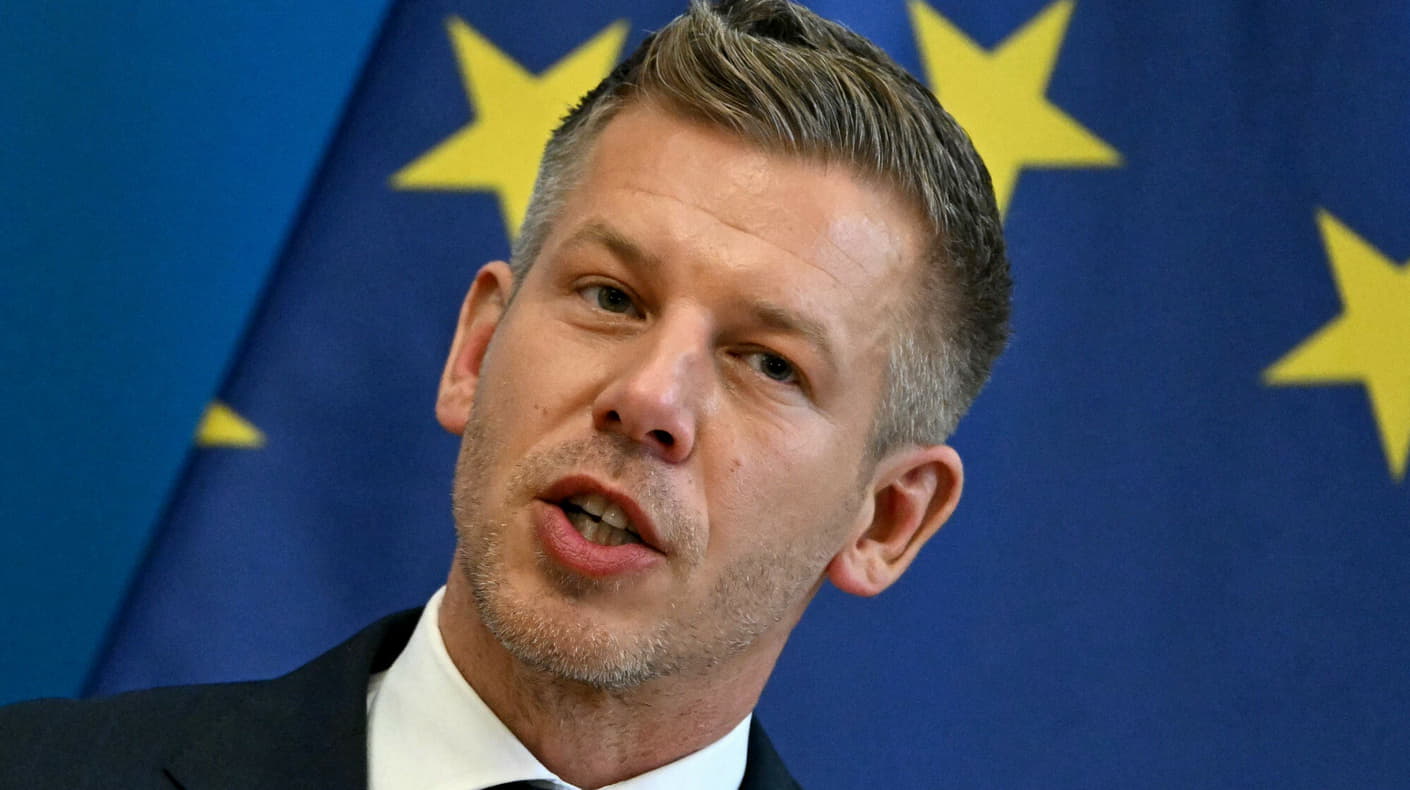
Once the law is passed, Hungarian Prime Minister Péter Magyar will be able to claim that he has won and has helped the Hungarian minority in Ukraine – an outcome his predecessor Viktor Orbán was unable to achieve.
And Ukraine will gain something no less important. Budapest is set to unblock two clusters in Ukraine’s EU accession negotiations on 13 October. Kyiv, Brussels and Budapest will have to stick to a fairly demanding schedule to meet that deadline.
This agreement does not resolve all the problems in the countries’ bilateral relations.
There is very little trust between Ukraine and Hungary, and the agreement underscores this.
It’s hoped that the current plan, if successful, will mark the beginning of a long-term solution to the crisis. Kyiv has stated that it expects to conclude further agreements with Hungary and wants EU accession negotiations to be fully open by the end of 2026.
However, this agreement leaves Orbán’s pro-Russian party on the losing side, so it cannot be ruled out that attempts may be made to derail the agreement between the Ukrainian and Hungarian governments.
How the Hungarian government changed its stance on Ukraine
Just two weeks ago the conflict was at its peak. In mid-September, Hungary refused to attend the Carpathian Eight summit. Instead, it began escalating the diplomatic conflict, openly demonstrating its disrespect for Ukraine.
The prime minister personally contributed to the bridge-burning.
And the summit wasn't the only issue. Péter Magyar announced that he was terminating an agreement between Ukraine's Naftogaz and Hungary's MOL to build oil storage facilities, a business deal that would have provided a new source of revenue for Hungary and greater fuel supply stability for Ukraine. Magyar gave no reason for terminating the agreement.
Why did Magyar do this? The context is important.
The Hungarian prime minister's anti-Ukraine remarks were made during a parliamentary session in response to renewed accusations from Orbán's party that the government had become "too pro-Ukrainian". It wasn’t the first time Magyar has been thrown off balance by such unfounded allegations.
But it wasn’t long before the Hungarian authorities realised they had gone too far.
Not all of Magyar's voters support his attacks on Ukraine, and Western countries are also becoming increasingly concerned about them. So just a few days later, Budapest began looking for ways to reopen dialogue with Kyiv.
The turning point came on the sidelines of the UN General Assembly in New York, sources say.
Hungarian Foreign Minister Anita Orbán met with her Ukrainian counterpart, Andrii Sybiha, and the two ministers agreed to keep the negotiations quiet for a while. Only now, as the implementation of the Kyiv-Budapest agreement has entered its final stages, has Sybiha acknowledged those talks.
Meanwhile, despite the public crisis, Anita Orbán suddenly gave an interview to Index, a Hungarian opposition outlet sympathetic to Viktor Orbán, in which she spoke of positive developments on the national minorities issue, without going into detail.
Behind-the-scenes negotiations were also taking place between Anita Orbán and Ukraine's Deputy Prime Minister for European Integration, Vsevolod Chentsov.
"Chentsov is talking to Anita so much these days that he's probably fluent in Hungarian by now," one of European Pravda's sources joked.
In a comment to European Pravda, Chentsov acknowledged the negotiations and spoke of the ongoing efforts to rebuild relations.
"We seek to build trust with Hungary. To achieve this, concrete practical steps are needed from both sides," he explained.
An action plan without a shred of trust
The details of the agreement, which has been obtained by European Pravda, clearly demonstrate the lack of trust between the two countries.
Each side is expected to fulfil an existing commitment and, in return, secure a diplomatic victory.
Ukraine has committed to adopting amendments to the Law On Education, which is nothing new – it’s one of the official benchmarks in the EU accession process. Hungary has committed to the opening of two more clusters in Ukraine's EU accession negotiations. This, too, is not a new commitment on Hungary's part: it promised to lift its veto back in June but did not do so.
Because of the lack of trust, however, Hungary and Ukraine have devised a framework in which the commitments are fulfilled in parallel, leaving each side the option of halting the process if the other breaks its promise.
Ukraine has taken the first public step under the agreement: a draft bill has been submitted to parliament. It was jointly drafted by the government and MPs and agreed on with minority communities.
Hungary is expected to take the next step.
On 6 October, at a meeting of COELA (the EU's Working Party on Enlargement) in Brussels, Hungary will agree to the Irish presidency sending Ukraine a letter requesting it to submit its negotiating positions to the EU for Clusters 2 and 3 (Internal Market and Competitiveness and Inclusive Growth).
This may sound like a highly technical decision, but it is this bureaucratic step that Hungary has been vetoing until now, blocking Ukraine's accession progress.
The subsequent technical procedures will then follow step by step, with the process expected to conclude on the afternoon of 13 October, when an Intergovernmental Conference will take place in Luxembourg.
Ukraine's Verkhovna Rada will have to convene an extraordinary session on 12 October to meet this deadline and fast-track the adoption of the amendments to the Law On Education.
"This will make it possible to open the second and third clusters ahead of the EU Summit on 15 October," Chentsov said. "Among other things, the summit will focus on enlargement. So opening the clusters for Ukraine and Moldova will send a strong signal that both the EU and the candidate countries take their commitments seriously."
For this to happen, the process will need to go ahead without a hitch. Parliamentary sources say this is achievable.
Amendments with no detriment to Ukraine
The substance of the draft bill is not new. Even under Orbán the discussions had focused on targeted amendments to Ukraine’s education legislation to address concerns raised by representatives of the Hungarian and Romanian minorities.
The Foreign Ministry emphasises that this cannot be called a "Hungarian law".
"It will apply not only to the Hungarian minority, but to all minorities living in Ukraine," Foreign Minister Andrii Sybiha stresses. There is one exception: the Russian language will not be covered.
Since Hungary has advocated for these provisions more vigorously than other EU member states, the negotiations have been conducted primarily with Budapest.
The main amendment is the introduction of national minority school status. Mykyta Poturaiev, co-author of the bill and chair of the Verkhovna Rada's Committee on Humanitarian and Information Policy, says there were discussions with Hungarian representatives over specific provisions during the drafting process, and compromises were reached on all of them.
The key question was at what point a school would qualify for national minority school status. "We reached an agreement with our Hungarian partners that the threshold would be 50% plus one student. However, if the number of students receiving Hungarian-medium education subsequently goes down, that won’t mean the school's status will be automatically revoked," the MP explains.
Another important provision for Hungarians, to which there have been no objections from the outset, is the explicit legal right of children to speak their own language at break time and during extracurricular activities.
There is also a fundamental innovation unrelated to Hungary.
There are separate provisions on the possibility of establishing schools for indigenous peoples – namely Crimean Tatar schools. The requirements here are considerably more flexible: just one class taught in an indigenous language is sufficient.
Poturaiev is confident the bill will receive enough votes.
"The bill will pass in the plenary chamber," he assured European Pravda.
The willingness of other parliamentary groups to support the bill is an encouraging sign. This is confirmed by Volodymyr Viatrovych, who has been a consistent advocate for legislative protection for the Ukrainian language and was involved in revising the draft.
"We’ve eliminated the main risks. The bill in its current form poses no danger, so I plan to vote in favour of it," he said.
There are also discussions about adopting, in the first reading, previously registered bills aimed at strengthening protection for the Ukrainian language alongside the amendments to the Law On Education. However, no decision has been made on this yet.
What’s next?
Officials in Kyiv believe that successfully implementing the agreement will make it possible to emerge from the prolonged crisis in Ukrainian-Hungarian relations and change the approach to bilateral ties.
Budapest’s official position has indeed shifted over the past couple of weeks. The Hungarian government has publicly thanked Kyiv for submitting the draft bill.
It’s hoped that this will pave the way for a meeting between the leaders of the two countries, which Magyar has been avoiding. Now the Hungarian prime minister will be able to tell his voters that he has achieved something in relations with Ukraine that Orbán failed to deliver.
Resolving the most urgent issue for national minorities will also allow the leaders to focus on other, less contentious matters in bilateral relations.
It’s hoped that a Zelenskyy-Magyar meeting will also lead to Hungary lifting its veto on the final two clusters in Ukraine's EU accession negotiations.
"We are fulfilling our commitments, and this should also be reflected in progress in the accession negotiations," said Chentsov, adding: "We expect the remaining clusters to be opened by the end of the year."
Sergiy Sydorenko
Editor, European Pravda