Coming Home Is Only the Beginning: What Ukraine Needs to Make It Sustainable

More than 1.5 million Ukrainians have already returned from abroad. Yet for almost 400,000 of them, coming back to Ukraine did not mean returning to their previous homes: after crossing the border, they remained internally displaced.
These figures point to a challenge Ukraine will increasingly have to address. Crossing the border is only one step in a much longer process that may involve finding a home and a job, accessing healthcare, enrolling children in school and rebuilding everyday life in a community.
The issue is becoming more urgent as millions of Ukrainians have now spent several years abroad, building careers, sending children to local schools and becoming part of their host communities. Some want to come back soon, some are waiting for greater security, and others may consider it years from now. Ukraine therefore needs to understand both what makes coming home possible and what helps people build a sustainable life once they are back.
What happens after people return?
Research conducted within YOUA – "Shaping New Paths, Building Ukraine’s Future" project offers a closer look at what happens after people come back and what may influence future decisions. Implemented by GIZ in cooperation with Ukraine’s Ministry of Social Policy, Family and Unity, the project combines research, policy support, work with communities, digital tools and dialogue with Ukrainians abroad.
A research team led by the ifo Institute is studying Ukrainians abroad, people who have returned and those who remained in Ukraine, including which policies can actually influence intentions to return.
The preliminary findings reveal some of the challenges after arrival. Among surveyed returnees, full-time employment stood at 43%, compared with 56% before the full-scale war, while 34% of those employed were working below their qualification level. Everyday expenses and access to healthcare and medicines were among the most frequently reported needs.
For a country that will need human capital for reconstruction, these findings matter. People coming back need opportunities to use their skills, regain economic stability and build a viable life in Ukraine.
What can actually influence return?
The decision to return depends on many factors, with security remaining the most fundamental. At the same time, economic and social conditions play an important role, influencing not only people’s willingness to return but also their ability to build a stable life in Ukraine. Public policy must therefore address both the factors that encourage return and the needs of people after they come back.
It is equally important that such policies take into account the interests not only of those returning from abroad but also of other groups within Ukrainian society.
Return policy should therefore be viewed in the broader context of strengthening social cohesion. Its purpose is not only to create incentives for Ukrainians to return from abroad but also to ensure a balanced approach to supporting everyone affected by the consequences of the war. The needs of returnees must be addressed alongside those of people who remained in Ukraine and those who have been internally displaced.
Return ultimately happens in a community
National policy can set the framework, but reintegration happens in a city, town or village, through access to housing, employment, schools, healthcare, services and social connections.
Over the past year, YOUA has worked with 10 pilot communities, with another 14 expected to join, helping them better understand the needs of people considering return, communicate local opportunities and develop practical solutions.
For some Ukrainians, coming back will not mean returning to the place they left. Homes have been destroyed, communities remain under occupation or close to the frontline, while employment or family circumstances may lead people elsewhere. Ukrainian communities may therefore increasingly become places where returnees build a new home rather than simply resume the life they had before the war.
From research to practical tools
People considering returning to Ukraine may need information about documents, employment, housing, healthcare, education and available support long before they make a decision.
One practical tool developed within YOUA in cooperation with the Ministry of Social Policy, Family and Unity is Dodomu, a digital platform that brings verified information together and helps users build a personalised return plan.
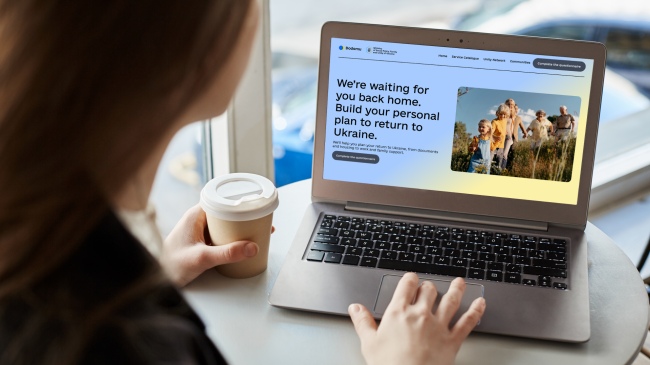
More than 68,000 users have already visited the platform, many of them exploring their options rather than preparing to move immediately. After a short questionnaire, Dodomu suggests relevant steps, services and communities based on the user’s circumstances, with more than 150 communities and 30 programmes and services already represented.
Dodomu remains in beta, and users are invited to test the platform and share feedback on missing information or services. People can also share their experiences of returning or considering a return, providing insights into the practical challenges they face.
Staying connected also matters
YOUA also works to strengthen dialogue between Ukrainians abroad and those living in Ukraine. The project does not seek to influence individual decisions about return; its work with institutions and communities focuses on creating better conditions for those who choose to come back.
Dialogue between communities, Ukrainians abroad, civil society organisations and people who have already returned can help maintain meaningful connections with Ukraine even when coming back is not an immediate plan. This will become increasingly important as Ukrainians abroad build professional experience, networks and lives in other countries, while retaining opportunities for future cooperation, knowledge exchange or eventual return.
For Ukraine, success cannot be measured by border crossings alone. Sustainable return will depend on whether people can find housing, use their professional skills, access essential services and see a future for their families here. At the same time, maintaining meaningful ties with Ukrainians who remain abroad will be essential for keeping them connected to the country and its future.
Getting people home is one challenge. Creating a country in which they can build a future – while keeping those abroad part of Ukraine’s future – is the bigger one.
Dodomu was developed within the YOUA "Shaping New Paths, Building Ukraine’s Future", implemented on behalf of the German Federal Ministry for Economic Cooperation and Development (BMZ) by Deutsche Gesellschaft für Internationale Zusammenarbeit (GIZ) GmbH in cooperation with the Ministry of Social Policy, Family and Unity of Ukraine. According to the project, no Ukrainian state budget funds were used to develop or operate the platform.
The project provides technical assistance only and does not influence individual decisions about returning to Ukraine. Participation in its activities and use of its services are entirely voluntary for people considering return, those who have already decided to return, and those currently reintegrating after returning to Ukraine.