America is back: NATO considers massive weapons support for Ukraine in 2026
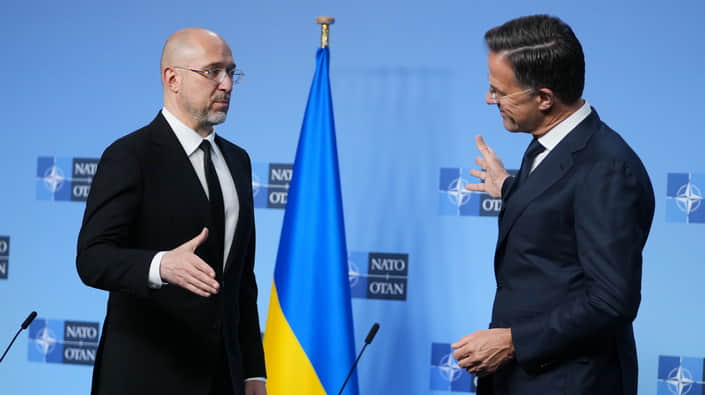
"The simple answer to your question is yes!" was UK Defence Secretary John Healey’s response when European Pravda asked whether NATO member states have finally realised that Ukraine should have a place within the Alliance.
"Ukraine is increasingly recognised and understood to play a part… The unique leading combat experience that it now has means that it can already and will in the future make a huge contribution to the security of Europe more generally," the British minister added.
The UK’s support for Ukraine’s NATO membership is nothing new – London has long held this position. But then something unexpected happened.
"I couldn’t agree more," German Defence Minister Boris Pistorius said, supporting Healey’s statement.
Can we say that Germany’s veto on Ukraine’s path to NATO membership has been lifted?
No, that would be going too far. After all, NATO enlargement won’t be back on the agenda until the war is over. But the balance of power we will see then will be completely different – seemingly a more favourable one for us.
The practical outcome of the NATO meeting was also to Ukraine’s benefit.
The talks in Brussels proved that the United States is coming back to the Russia-Ukraine war, this time on our side. US Defense Secretary Pete Hegseth, formerly a leading critic of support for Ukraine, has completely changed his tune – clearly in response to the evolution of US President Donald Trump’s own views.
The most important factor behind the shift in the US position, which was also the main achievement of the Brussels meeting, is the fact that most NATO member states have agreed to participate in purchasing US-made weapons for Ukraine, including long-range systems. With the exception of Germany, however, key European members of the Alliance remain outside this programme – each for their own reasons.
Game-changing drones
Russia’s war against Ukraine has evolved significantly over the past three and a half years. Drones have undoubtedly been a driving force behind these changes: both tactical FPV drones on the battlefield and long-range drones, which have been widely discussed and analysed. The drones themselves have also changed considerably during this time.
But alongside these changes, the way Ukraine is perceived by other actors – both Russia and Ukraine’s allies – has changed as well.
A key event that brought NATO’s assessments to a new stage was the warning strike on Poland using unarmed drones on the night of 9-10 September (explained in this article: What is the goal of Russia's mass drone attack on Poland?), which revealed the ineffectiveness of the EU’s anti-drone defence compared to Ukraine’s. The Poles, with help from the Netherlands, only managed to shoot down three decoy drones, accidentally destroying a house with an air defence missile in the process. Meanwhile, some of the drones successfully dodged military pursuit and were later found hundreds of miles from the border.
Ukraine’s Ambassador to NATO, Aliona Hetmanchuk, says this incident was the turning point that changed attitudes towards Ukraine within NATO. Journalists could see this shift for themselves at the final press conference held jointly by the defence ministers of Germany, the United Kingdom and Ukraine.
Nevertheless, despite the obvious failure on 9-10 September, NATO’s importance in countering drone threats should not be underestimated, a fact that was reaffirmed once again in Brussels. Ukraine has indeed gained unique combat experience during the war and has truly become one of the pillars of European security, but this complements the Alliance’s capabilities rather than replacing them.
This point is best illustrated by the story of how NATO, at Ukraine’s request, is developing weapons to combat not only Iranian Shaheds but also guided aerial bombs.
Importantly for us, the significance of Ukraine’s experience is now recognised even in countries that were previously opposed to Ukraine joining NATO, including Germany.
So when the war is over and the question of membership for Ukraine is back on the agenda, the balance of attitudes in Europe will have changed significantly from how it was in the past – at the Vilnius summit, for example, where Germany, together with the US, blocked an invitation for Ukraine.
America is back in the game
The main topic of the NATO ministerial meeting, however, was not drones (although there was extensive discussion about drone production and supply to Ukraine and the pan-European "drone wall" project).
The focus of the NATO defence ministers’ meeting was US-made weapons.
Secretary General Mark Rutte was quick to reassure reporters that America is back.
He was referring to the gradual shift in US policy regarding Ukraine and the supply of US-made weapons to resist Russian aggression. Adjustments in Washington’s position on this matter had been ongoing for several months, but by autumn, they seemed to have reached a point of no return.
Just a few months ago, the US was opposed to sending any weapons to Ukraine, arguing that it would only "prolong" the war. Six months ago and even somewhat later, the Americans even halted intelligence-sharing with Ukraine.
Anti-Ukrainian sentiment seemed embodied in Pete Hegseth, the Trump-appointed Pentagon chief who, during his first visit to Brussels in February 2025, suddenly spoke out against a return to Ukraine’s 2014 borders and NATO membership for Ukraine. Hegseth was also behind some of the suspension of weapons deliveries to the Ukrainian Armed Forces. He removed the US from the Ukraine Defence Contact Group (also known as the Ramstein format) and later, when the US did return to the group, became known for pointedly ignoring its meetings.
Given this context, it can truly be said that America is back in the game after 15 October.
Pete Hegseth attended the Ramstein meeting, sitting next to the UK representative who was chairing it. He also appeared at the meeting of the Ukraine-NATO Council, which he had previously ignored.
Moreover, he spoke in support of supplying arms to Ukraine.
"If there is anything we've learned under President Trump, it is the active application of 'peace through strength'. You get peace when you are strong," Hegseth said ahead of the meeting.
"Allies often say that Ukraine's security is synonymous with European security," he added in his opening remarks at the Ramstein-format meeting.
The explanation for this dramatic turnaround is simple.
At the core of it is the PURL (Prioritised Ukraine Requirements List) initiative. The idea of PURL was proposed in the summer by NATO Secretary General Mark Rutte with the specific aim of rekindling US interest in strengthening Ukraine’s military capabilities. Under the proposal, NATO allies and partner countries voluntarily allocate funds which are used to purchase weapons in the US from a list drawn up by Ukraine.
This financial approach proved very attractive to the US government – so attractive, in fact, that Trump now openly acknowledges Ukraine's desire to go on the offensive and seems ready to support it.
This also confirms the notion that "America is back", albeit in a different form. But it was NATO partners’ ideas and money that helped the US overcome its hesitation and come back.
Who is contributing to PURL?
Financial incentives only work, however, if they are actually backed by funding.
At first, PURL faced some challenges in this regard. Since Europe is now publicly promoting the idea of building up its own defence industry, not everyone liked the idea of spending money on purchases from the US.
Ukraine’s Ambassador to NATO, Aliona Hetmanchuk, told European Pravda how this obstacle was overcome in several countries. Kyiv prepared a visual briefing, with numbers and charts, showing where the Ukrainian Armed Forces could purchase specific weapons.
"When our European partners see that for certain items through PURL, we are covering 90% or more, that’s a serious argument for them to consider contributing to the initiative," she said.
It turns out that for certain types of weapons, the US is simply the only supplier.
Some equipment just isn’t produced in Europe – for example, PAC-3 interceptors for Patriot systems, which can shoot down ballistic missiles, are currently only supplied by a US manufacturer. "And there are some items that only the US can cover in terms of quantity and availability, meaning they are already in stock and can be delivered to Ukraine quickly," the ambassador explained. This particularly applies to long-range artillery shells for Western systems, which are available in Pentagon stockpiles.
US pressure also played a role. Washington has convincingly argued: if you want security on your continent, then buy what you need to ensure that security from us.
The result was that the Brussels meeting saw a surge in countries joining PURL. NATO Secretary General Mark Rutte said that as of the morning of 15 October, only six countries had committed to funding the programme – the Netherlands, Germany, Canada, Sweden, Norway and Denmark. These were the only countries that had officially participated for more than two months since the scheme was announced on 4 August.
But by the end of that one day, 15 October, the number had risen to 17 countries – more than half of all NATO members.
Who else is funding US arms purchases for Ukraine?
NATO has not yet released an official list, but according to European Pravda sources, the following countries have joined: the entire Nordic-Baltic region (Finland, Iceland, Estonia, Latvia and Lithuania), the Benelux countries (Belgium and Luxembourg have joined the Netherlands), Slovenia, Portugal, and two other countries that have yet to be identified.
This list shows that support for initiatives in aid of Ukraine still has a regional focus, and that the countries most willing to take unconventional measures to deter Russian aggression are often the usual ones.
But it’s even more interesting to see who has not joined the initiative.
With the exception of Germany, none of the major European economies are ready to take part in this vitally important initiative for Ukraine, although they have different reasons for this.
The UK has explained that it already provides sufficient support to Ukraine, supplying weapons that no other country provides. Sources cited by European Pravda and British media have noted another reason: the difficulty of reallocating budget funds mid-year, as the UK’s fiscal year runs from April to April. There is a chance London may join in the next fiscal year.
France has given no explanation and simply hasn’t joined. Paris is a key lobbyist for European defence procurement, making PURL ideologically "foreign" to Macron. In addition, the French government is currently in turmoil. Similar arguments appear to apply to Italy.
Spain’s reasoning is simpler: it does not want to spend money from an already tight budget. The country is facing difficulties within NATO generally: Madrid is the only capital that has refused to up its defence and infrastructure spending to 5%, prompting Trump to threaten economic sanctions and even to suggest expelling Spain from NATO.
However, this situation may ultimately make Spanish funding for PURL more likely. To appease the US, Madrid is apparently determined to find some money for American weapons – but only after the Brussels meeting. "Spain will always be part of the solution to problems, and if joining this initiative is necessary to help Ukraine, then Ukraine is our priority," explained Spanish Defence Minister Margarita Robles.
In short, US pressure is working.
The "war economy" for 2026
Another feature of PURL is that it involves monthly contributions, so it’s not possible for a country to simply declare its willingness and then hide behind its promise and fail to come up with funds for an extended period.
What matters, however, is not whether a country joins the initiative, but the amount of funding it provides. Currently, exact figures are not being disclosed, but NATO briefings indicate that US$3 billion worth of PURL requirements will remain unmet by the end of 2025. That is a significant sum, although it may go down after contributions from the new joiners have been confirmed, especially since Ukraine is counting on some countries to increase their contributions, European Pravda sources say.
The war is not going to end in 2025, however. Even optimists don’t dispute that.
And that means funding is also needed for 2026. Defence Minister Denys Shmyhal told Ukraine’s partners in Brussels that projected PURL needs for next year range from US$12 billion to US$20 billion, depending in part on whether Europe can rapidly scale up its own production.
But US weapons alone won’t solve everything,
especially if Ukraine – if Trump is to be believed – is preparing for counteroffensive operations.
The Ukrainian government anticipates that defence funding will increase significantly next year, enabling Kyiv to seize the initiative. This was Shmyhal’s central message in all his public appearances at NATO, and presumably it was discussed in greater detail behind closed doors.
Shmyhal has proposed that funding for the Ukrainian Armed Forces should be brought up to the same level as the Russian army, effectively aiming for parity in resources.
"Russia spends US$120 billion a year on its war. The rules of war say that if you spend less, you start paying with lives and territory. Therefore, our goal is to maintain the balance of this ‘war economy’ and spend at least US$120 billion in 2026," he explained in Brussels.
How significant an increase is this? This year, according to Defence Ministry estimates, Ukraine’s military expenditure will be around US$100 billion, so the plan envisages a US$20 billion increase. "That’s the minimum," Shmyhal emphasised.
Ukraine intends to cover half of this sum on its own, through taxation, meaning it is counting on US$60 billion in military aid alone (in addition to other types of aid). These are substantial sums. Kyiv is therefore hoping that the EU will finally implement at least a "hybrid confiscation" of Russian assets to fund Ukraine’s war effort against Russia.
But that conversation, unlike the launch of PURL, is only just getting started.
Sergiy Sydorenko,
Editor, European Pravda,
from Brussels