From Lithuania to Germany: who else is proposing a new path to EU for Ukraine and what lies behind it
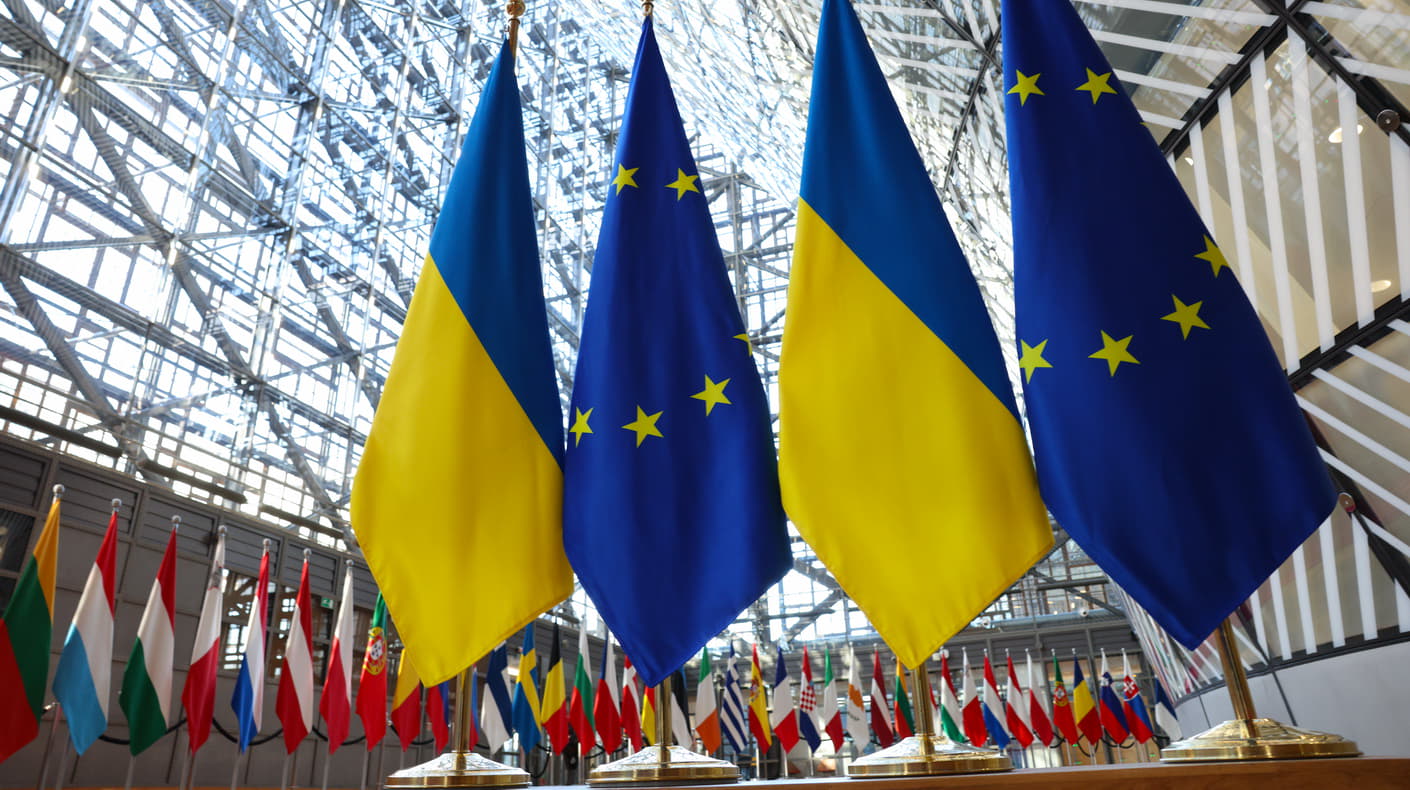
The letter from German Chancellor Friedrich Merz to the leadership of the EU institutions has reignited discussions about how to rethink the approach to the pre-accession integration of candidate countries, above all Ukraine. In Kyiv, these proposals have been met with considerable scepticism, amid concerns that the new framework could become a substitute for full EU membership.
European Pravda has published detailed coverage of both the criticism of these proposals and the arguments in their defence, as well as explanations provided by the official German side.
The editorial team has also received an article by leading European experts Steven Blockmans and Michael Emerson, who join the debate and explain why Germany’s ideas may, in fact, have considerable merit.
Rejecting a ‘membership light’ offer because of its negatively perceived symbolism means failing to take advantage of valuable deliberative and participatory rights in the EU.
In a system built on consensus rather than majority voting, having a seat at the table can matter as much as having a vote. Candidate countries with speaking rights can shape EU decisions and legislation.
The extension of representative rights prior to accession does not relegate candidate countries to a waiting room. It marks an important signpost on the formal trajectory towards full membership.
EU should open the clusters all together
In May, the EU quietly broke a months-long stalemate over Ukraine, pushing through an expansion of the mandate for its advisory mission to the country (EUAM) after Hungary lifted its opposition, sustained since late 2025.
The decision drew far less media attention than the €90 bn loan that Budapest had likewise stalled since January, but the significance of this seemingly technocratic amendment should not be underestimated: it could help prepare the war-torn country for eventual EU membership by accelerating reforms to its rule of law and civilian security institutions.
The opening of accession negotiations on these Fundamentals (cluster 1) is expected to happen by the June European Council, following technical consultations between Budapest and Kyiv, after the new Hungarian Prime Minister Péter Magyar said that Ukraine must ensure the Hungarian minority enjoys the same rights as minorities in other EU countries.
As we have argued elsewhere, accession talks should commence with all 35 negotiation chapters to be opened at an early stage of the process, so that preparedness for membership can be measured across the board and be rewarded with gradually higher levels of access to the EU’s policies, institutions and funding each time average rating thresholds are met.
Combining pre-accession access in technical areas like transport, financial services and food safety with progress in the justice and interior sectors (chapters 23 and 24) in the average ratings ensures that candidate countries do not just pick the low-hanging fruits but also crack the hardest nuts.
It also protects them from ending up with access to just certain areas of the single market, i.e., partial rather than full membership.
Support for a form of staged accession for all candidate countries that have opened membership negotiations is found in separate proposals from three member states [Lithuania, Germany and France], which have been in circulation since April.
Each of the so-called non-papers introduces an eye-catching label of advanced pre-membership status
and is intended to accelerate membership talks and prevent the recurrence of old dysfunctionalities in the enlargement methodology.
Rather than dismissing it out of hand, Ukraine should embrace this move.
Yet the EU’s offer to Ukraine should also include steps to recognise its unique and technologically impressive war effort on behalf of all of Europe beyond itself.
Paris advocates an "integrated status" for Ukraine
To signal a firm determination about expanding the EU, a French non-paper talks about extending "integrated state status" encompassing gradually upscaled representative rights in the institutions and pre-accession access to EU policies and "all funding programmes which are open to third countries", subject to candidates having made sufficient progress with regard to the fundamentals and the principle of reversibility.
This comes close to the ‘nominated member state’ proposal we made in February, whereby a (geo)politically significant commitment by the EU is backed up with important representative, but not voting, rights for Ukraine and other candidate countries in the Council of Ministers and other EU bodies.
The French paper employs lots of grand language ("accelerating", "streamlined", "upscaled", "enhanced") but is mostly vague in its proposals, except for its exclusions, most notably that of no access to the common agricultural policy and cohesion funds until after accession.
Berlin: focus on Ukraine
A German non-paper sent by Chancellor Merz to Presidents Costa, von der Leyen, and Christodoulides for discussion at the June European Council proposes "associate membership" for Ukraine, which is weaker than the French label since the candidate country already has an association agreement with the EU.
However, the German proposal goes much further in spelling out institutional access prior to formal accession, with, among others, full participation (without voting rights) in European Council and Council meetings, and the appointment of an associate Commissioner (without portfolio), associate MEPs (without voting rights), and an associate judge of the Court of Justice. Here, too, an incremental approach in stages would make sense.
Helpfully, the German proposal also spells out how the principle of reversibility might be operationalised. It introduces a ‘snap-back mechanism’ in case of backsliding on respect for the fundamental values of the EU: structural steps back in the accession negotiations.
The German chancellery does not propose associate membership for Moldova and the Western Balkans.
Instead, it calls on members of the European Council to look into innovative solutions to accelerate the accession process for those countries, most notably by granting "observer status in all relevant EU institutions" upon substantive progress on priority pathways into the internal market.
For Berlin, the distinguishing feature between Ukraine and the other candidate countries lies in the "particular situation the country has been forced into" by Russia, and the time pressure the EU is under to enhance Ukraine’s position in view of the impending peace process.
Incidentally, it is worth noting that neither the French nor the German non-paper mentions extending qualified majority voting (QMV) to intermediate steps in the accession process, an idea that several think tanks have been pushing for years.
Lithuania’s idea of an "acceding state"
A Lithuanian non-paper does make this plea, but other member states have not endorsed it so far. One concern about the paper is that it proposes that the EU set a target date for "membership within this decade".
Worryingly, another reason may be opposition to mainstreaming QMV in the pre-accession process.
Vilnius suggested that the concept of "acceding state", which currently only exists once an accession treaty has been signed, be applied to a candidate country already much earlier, i.e., "once it successfully passes the 1st cluster Interim Benchmark Assessment Report (IBAR), demonstrates comprehensive alignment with the acquis, and achieves advanced (at least 90%) alignment with the EU’s Common Foreign and Security Policy (CFSP)".
These are attractive proposals that merit serious consideration
and should not be left by the wayside by the European Council and in the follow-up to its discussion.
Bestowing "acceding state" status would send a much stronger signal than "associate member".
Ukraine’s unique security role
It is striking that the German non-paper also highlights that Article 42.7 – the EU's mutual defence clause – could be made de facto applicable through a mere political declaration.
This is likely to be more than one bridge too far for several other member states prior to a sustainable peace deal with Russia, but could be implemented through a coalition of the able and willing to extend such security guarantees.
Indeed, Ukraine’s unique role in countering Russian aggression deserves more explicit recognition than is evident in the three non-papers.
Ukraine should be fully integrated in whatever emerges in the direction of an emerging European Defence Union.
This implies not just defence industrial integration, but also inclusion of Ukraine in a future European Security Council, its supporting command structures, and multinational force packages.
A beacon, not a waiting room
Dismissing an advanced status offer for its negatively perceived ‘symbolism’ while continuing to push an unrealistic goal of obtaining full membership in the next year or two is not just tantamount to shooting oneself in the foot by forgoing early and valuable deliberative and participatory rights in an EU that puts a premium on consensus-building rather than majority rule.
Having a seat at the table often matters as much as having a vote.
Candidate countries which are bestowed with speaking rights gain influence in the decision-shaping process of EU positions and legislation where, more often than not, no vote is taken. Rejecting such an offer is to underestimate the value and promise it holds.
It is also a denial of how enlargement politics work between and within EU member states; a refusal which no amount of repetition of the (valid) argument that Ukraine is fighting in defence of all of Europe is going to overcome.
The merits-based approach to pre-accession means that the process is a marathon, not a sprint. The German non-paper puts a fine point on this: given the "countless hurdles" in the accession process and the "political complexities of ratification processes in various member states", it takes years to obtain full membership.
A candidate country needs to earn the trust of its future peers who will share their money and power with the new entrant.
Trust takes time to be earned and can be lost instantly. Experiences with member states backsliding on respect for democracy and the rule of law, as indeed news of recent corruption scandals rocking Kyiv, have only hardened the EU’s resolve in strictly applying this fundamental condition for membership.
This is why cluster 1 of the accession negotiations is opened first and closed last: to have the time to assess the track record.
Finally, the current alignment of stars is vulnerable to the prospects of electoral gains by populist radical right parties like the Rassemblement National and the Alternative für Deutschland, which oppose enlargement outright; these should be distinguished from parties like Fidesz which oppose EU membership for Ukraine and Moldova but advocate for accession of the Western Balkans.
Even if Fidesz has been knocked off its pedestal, populist radical right parties continue to rise across Europe. Their framing of the enlargement policy and candidate countries is likely to influence public opinion across the EU, forcing governments and other actors to adopt a more cautious approach to enlargement, especially in countries where referenda must be won to ratify accession treaties.
Form over substance?
Tinkering with the enlargement methodology is no substitute for geopolitics. It is high time for the European Council to open accession talks with Ukraine and Moldova.
The recent flurry of seemingly technocratic decisions and proposals indicates that something is, indeed, afoot. The politics around the enlargement methodology are slowly shifting in the governments of key swing member states, such as France and Germany.
It is evident that Paris and Berlin recognise that something needs to be done now to prevent old ghosts of the pre-accession process from rearing their ugly heads as and when anti-enlargement parties may gain strength. In the meantime, Ukraine should seize every opportunity to accelerate its accession process.
For their part, the friends of EU enlargement should harness the process so that the gradual integration of candidate countries does not fall prey to nativist and revisionist tendencies inside the European Union.
The offer needs to transcend mere symbolism and be concretely benchmarked (cf., ‘staged accession model’). To be meaningful, it needs to go beyond the initial priority pathways into the single market and integrate Ukraine into the emerging European Defence Union as a prospective full founding member.
Concretely, participation in EU Councils without voting rights should be seen as a major advance in institutional integration,
since this leaves open all possibilities for decision-shaping, with most decision-making actually taking place without a vote.
The idea behind the flurry of member state proposals is not to invent new vocabulary for postponing or substituting membership,
but to genuinely accelerate accession in a credible and manageable way.
The extension of representative rights prior to accession does not relegate candidate countries to a waiting room. It marks an important signpost on the formal trajectory towards full membership.
Steven Blockmans, Deputy Director of the International Centre for Defence and Security (Tallinn),
Michael Emerson, Associate Senior Fellow at the Centre for European Policy Studies (Brussels),
For European Pravda